


Standard or Custom Bulk material
What is better for your project?
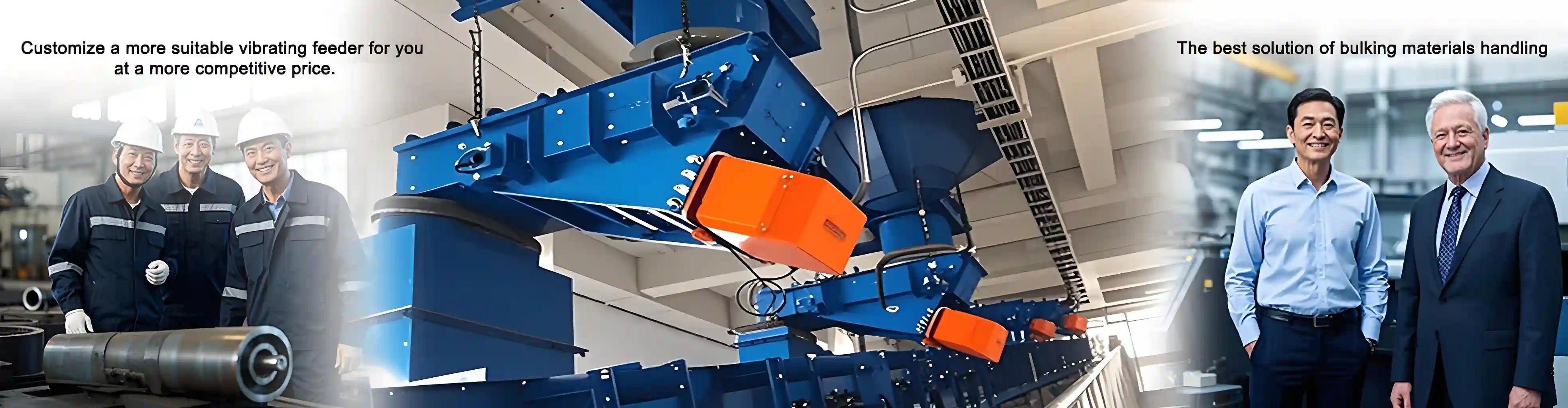
A vibrating feeder is a
critical, high-efficiency material handling machine designed to continuously and
evenly convey bulk, granular, or powdered materials—such as ores, cement,
grains, or chemical raw materials—from hoppers, silos, or bins to downstream
processing equipment like crushers, screens, or mixers. Although the structure of the vibrating feeder is quite simple, it can vary greatly depending on different application scenarios. This article will take you through the types of vibrating feeders.
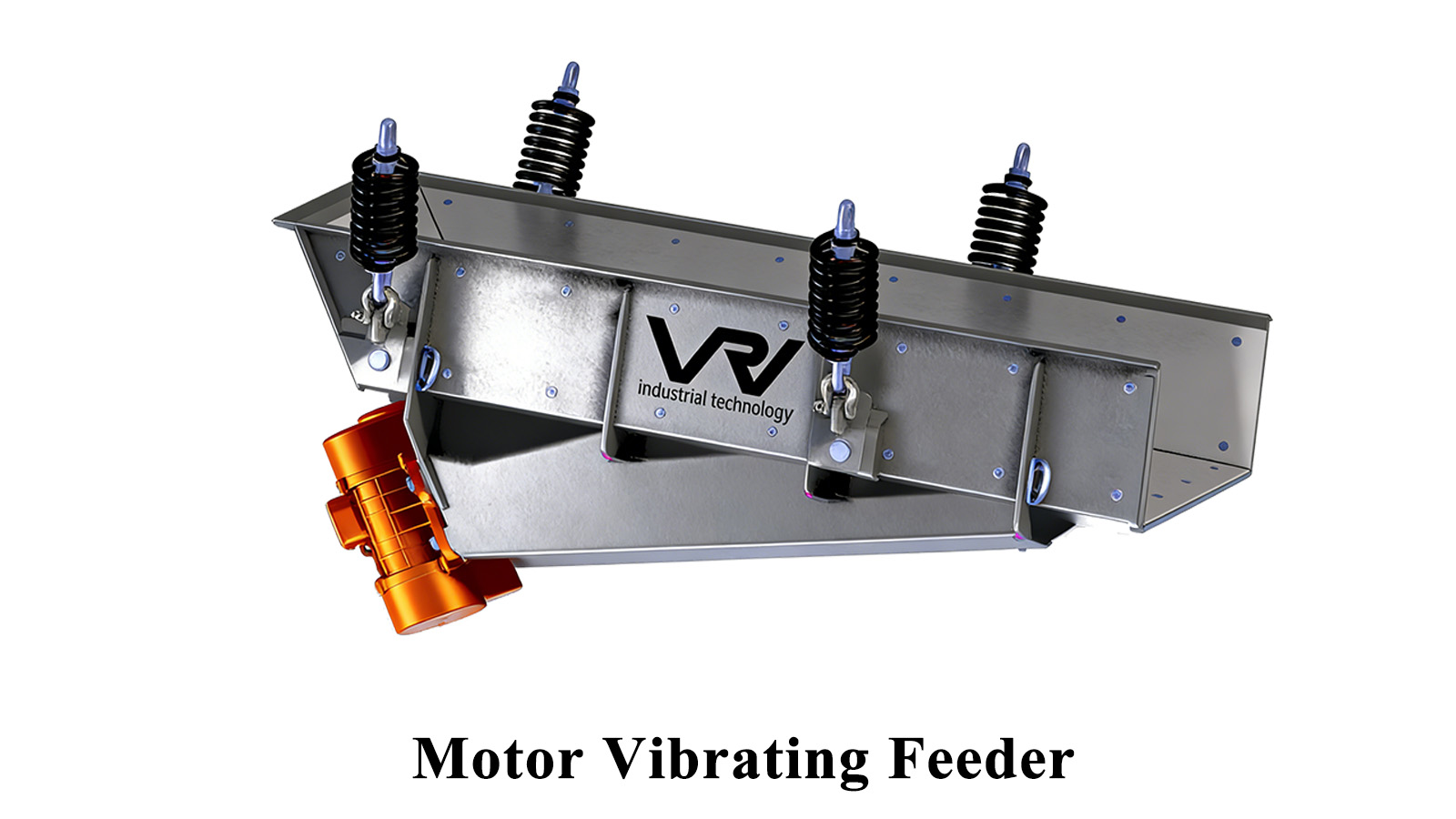
The motor vibrating feeder is a high-efficiency industrial machine that uses vibration motors as the excitation source to convey bulk materials. It uniformly, continuously, and quantitatively feeds loose materials such as blocks, granules, and powders from storage bins or hoppers to downstream equipment like crushers, screens, or conveyors. Featuring a simple structure with core components including a trough, vibration motors, and shock-absorbing springs, it supports both suspended and seated installation for adaptability to complex working conditions. With adjustable vibration intensity and frequency via optional frequency conversion motors—it ensures stable and sensitive feeding while offering low maintenance costs and long service life. Widely applied in mining, metallurgy, coal, construction materials, chemical, and electric power industries, this reliable feeder enhances production line efficiency by preventing equipment blockages and stabilizing material flow.
Features
1. Large feeding capacity
2. Simple
structure & easy maintenance
3. Strong adaptability
4.Low
energy consumption
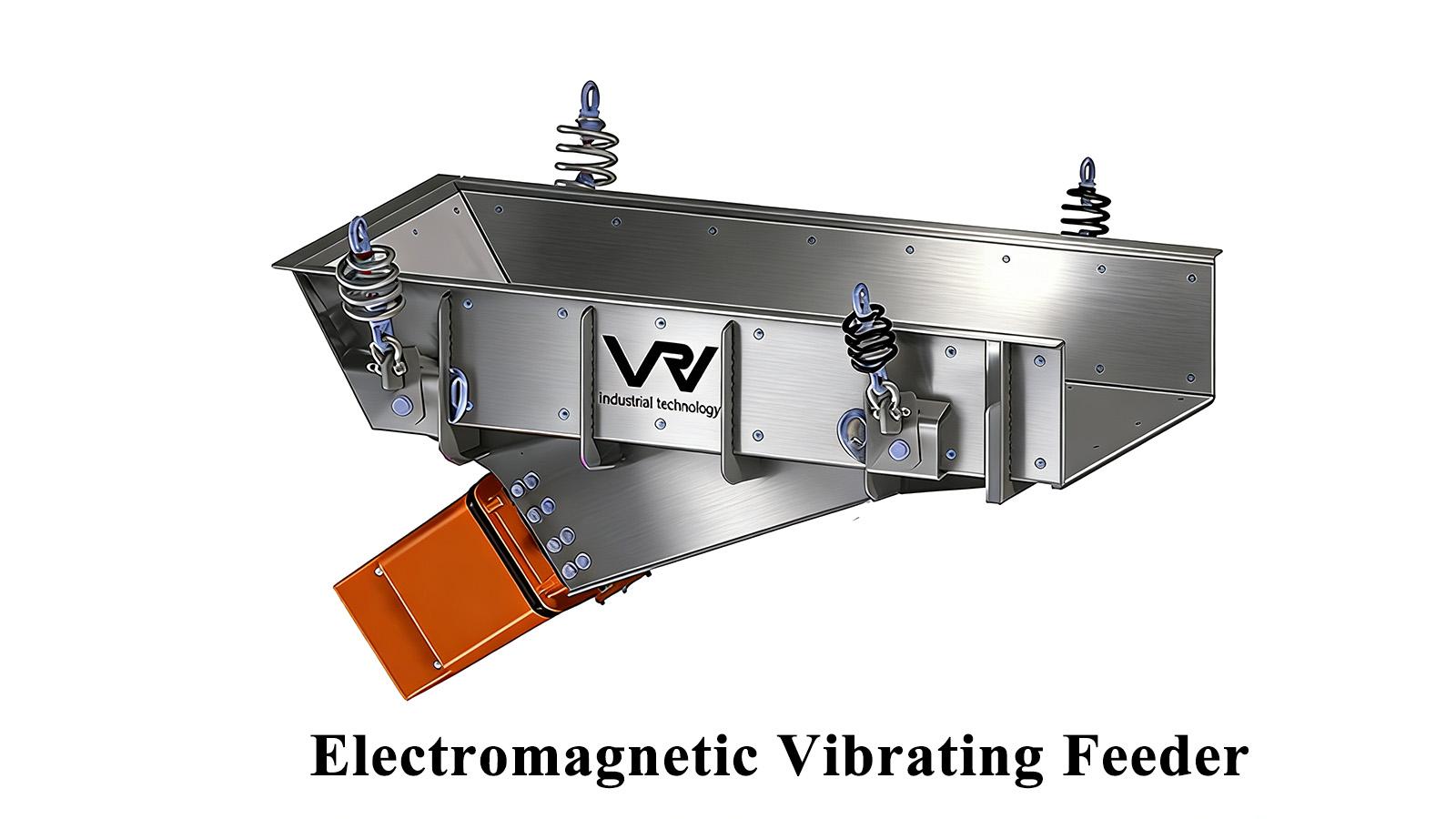
The electromagnetic vibrating feeder is an automated feeding machine that drives the tray or tube to vibrate reciprocally relying on an electromagnetic vibrator. It can uniformly, quantitatively and continuously convey bulk, granular or powdered materials from the storage bin to the receiving device. It features a simple structure, no need for lubrication, low energy consumption, and stepless adjustment of the feeding amount. It can achieve automatic control of the production process and is widely used in various industries such as mining, metallurgy, coal, chemical engineering, electric power, and grain.
|
Features |
|
1. Precise feeding, stepless adjustment of output. |
|
2. Energy-efficient, low power consumption. |
|
3. Simple structure, easy installation and maintenance. |
|
4. Gentle material handling, low breakage rate. |
|
5. Low noise and dust, eco-friendly operation. |
|
6. Fast start-stop response, suitable for automated systems. |
|
7. No wearing parts, long service life. |
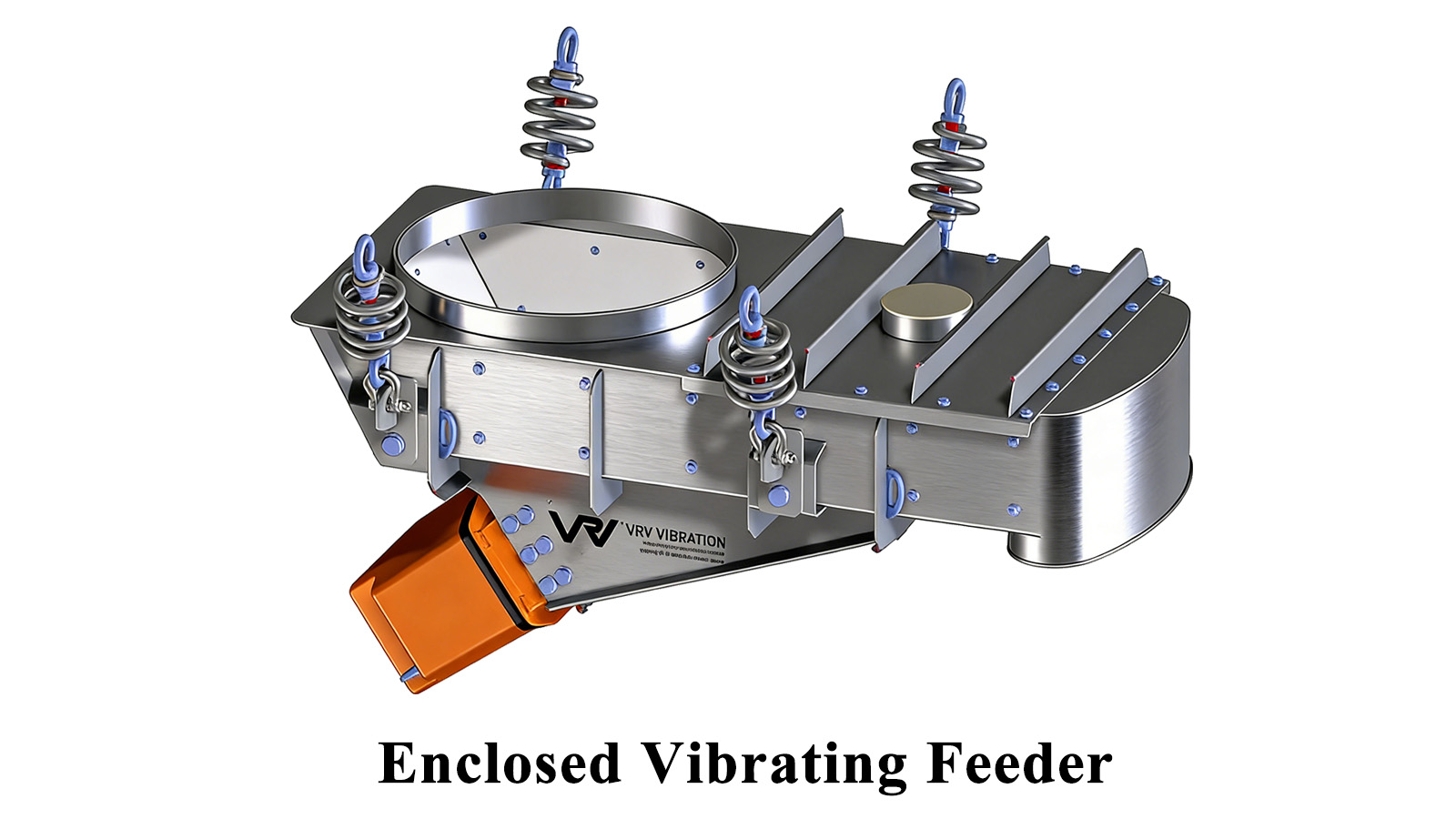
The biggest
difference between the closed - type vibrating feeder and the open - type
vibrating feeder lies in whether it has a closed trough structure. The closed -
type vibrating feeder has a sealed trough that can completely enclose the
trough and the material - conveying area. This can effectively prevent dust
from flying during material transportation, reduce noise diffusion, and avoid
external impurities from mixing into the materials. It is suitable for
scenarios in mining, chemical industry, building materials, etc., where
requirements for environmental cleanliness, material purity, or noise control
are high. The closed - type vibrating feeder can use either a vibrating motor
or an electromagnetic vibrator as the excitation source to provide power for
the vibrating transportation of materials.
|
Features |
|
1. Sealed structure:Dust/leakage prevention |
|
2. Stable feeding:Uniform & continuous delivery |
|
3. Low energy consumption:High-efficiency, low power loss |
|
4. Strong adaptability:Multi-material compatibility |
|
5.Easy maintenance:Few wearing parts, easy repair |
The compact vibrating feeder is a material
- conveying device with a small size and a compact layout. It is often equipped
with a pedestal - type electromagnetic vibrator as the power source. Through
vibration, it can uniformly and continuously feed materials such as granules
and powders. It is suitable for production line scenarios with limited space.
It has the characteristics of flexible installation, low energy consumption,
and controllable feeding accuracy. It is widely used in the material pre - treatment
or production transfer links of industries such as mining, chemical
engineering, and food.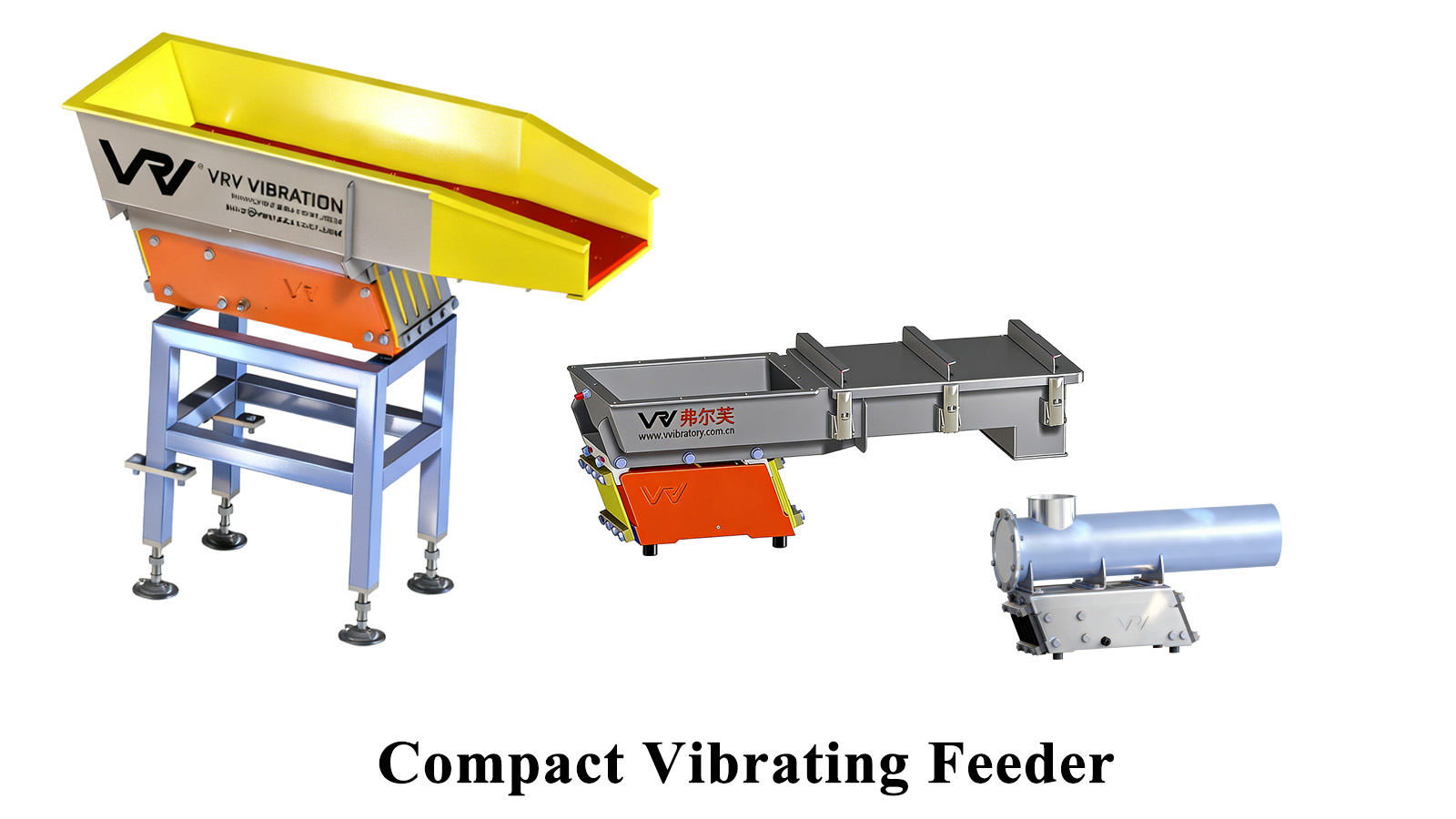
|
Features |
|
1. Pedestal - mounted and no additional support is required. |
|
2. Without rotating parts, it has a long lifespan and is maintenance - free. |
|
3. With a compact structure, it takes up little space and is easy to operate. |
|
4. Stable operation |
|
5. High control accuracy and can start and stop without delay. |
|
6. Low noise and low power consumption. |
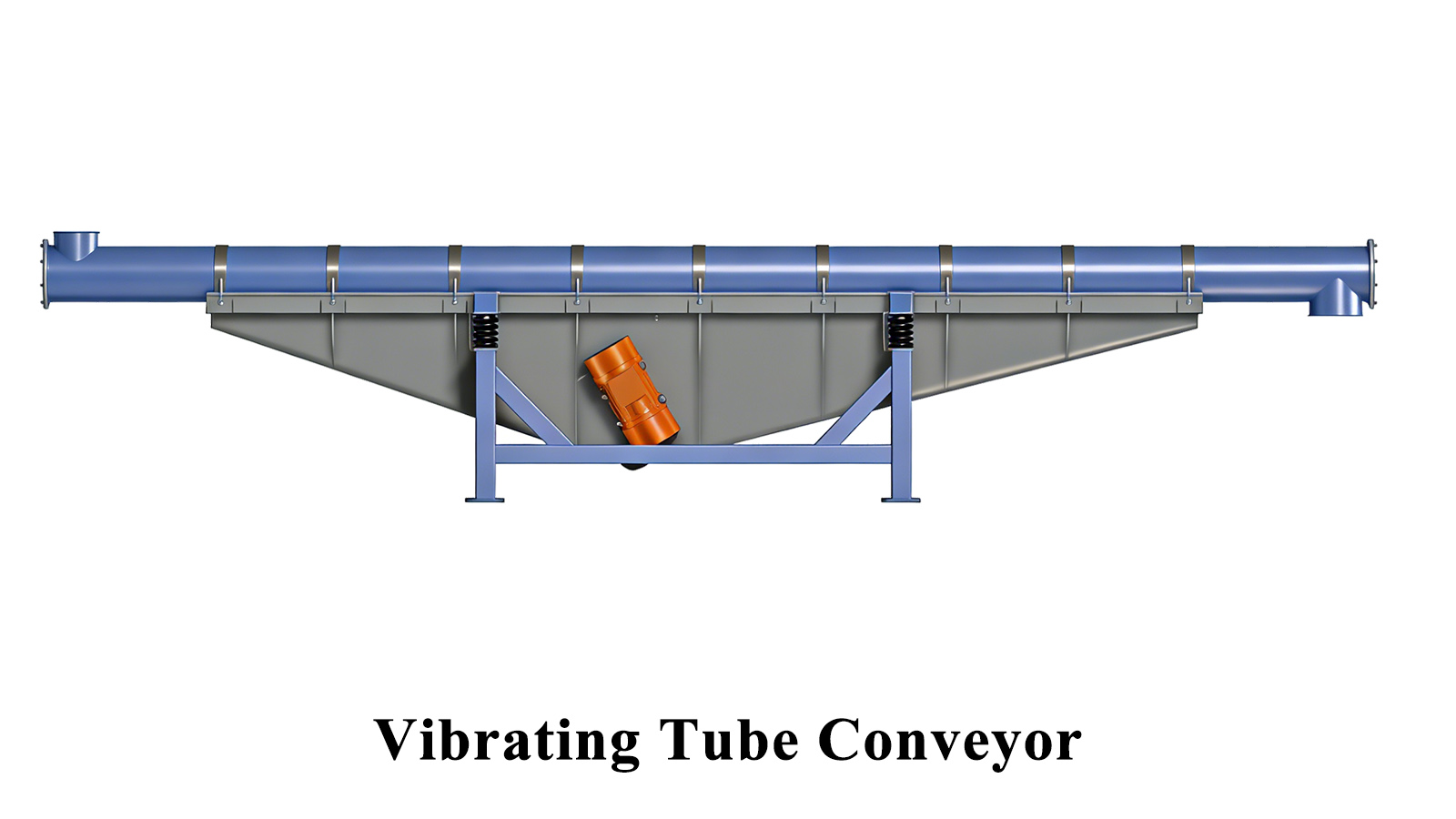
The Vibrating tube conveyor is a continuous feeding machine powered by vibration. Its core components include a sealed tubular trough, a vibrating motor (or exciter), an elastic support device, etc. The directional exciting force generated by the vibrating motor makes the powdered, granular or small - sized bulk materials in the tubular trough body perform continuous throwing or sliding movements, thus achieving smooth transportation and quantitative feeding from the feed inlet to the discharge outlet. It inherits the advantages of tubular equipment such as dust - tight sealing, a compact structure, and a small footprint. At the same time, due to its vibration - driven characteristics, material blockage is less likely to occur. Moreover, the feeding amount can be precisely controlled by adjusting the vibration frequency or amplitude. Compared with the screw - type tubular feeder, it has no internal rotating parts (such as screw blades), resulting in less wear and easier maintenance, making it more suitable for conveying materials that are prone to adhesion and blockage.
|
Features |
|
1. Continuous feeding: Provides continuous material feeding. |
|
2. Sealed design: Keeps dust in and is dust - tight. |
|
3. Compact structure: Occupies little space. |
|
4. Vibration - driven: Reduces material blockage. |
|
5. Precise control: Adjusts feeding amount via vibration. |
|
6. Low - wear: No internal rotating parts, less wear. |
|
7. Easy maintenance: Simple to maintain. |
Long Vibrating Conveyor is a high-efficiency long-distance conveying equipment designed for horizontal and slightly inclined transportation of powder, granular and bulk materials. Driven by vibration motors, it delivers stable and uniform material flow with low noise and easy maintenance. Equipped with a fully enclosed structure, it effectively avoids dust spillage and material contamination, and is widely applied in mining, building materials, chemical, food and other industries. We provide customized models with different lengths, materials (mild steel, stainless steel 304/316L) and conveying capacities to meet various working conditions.
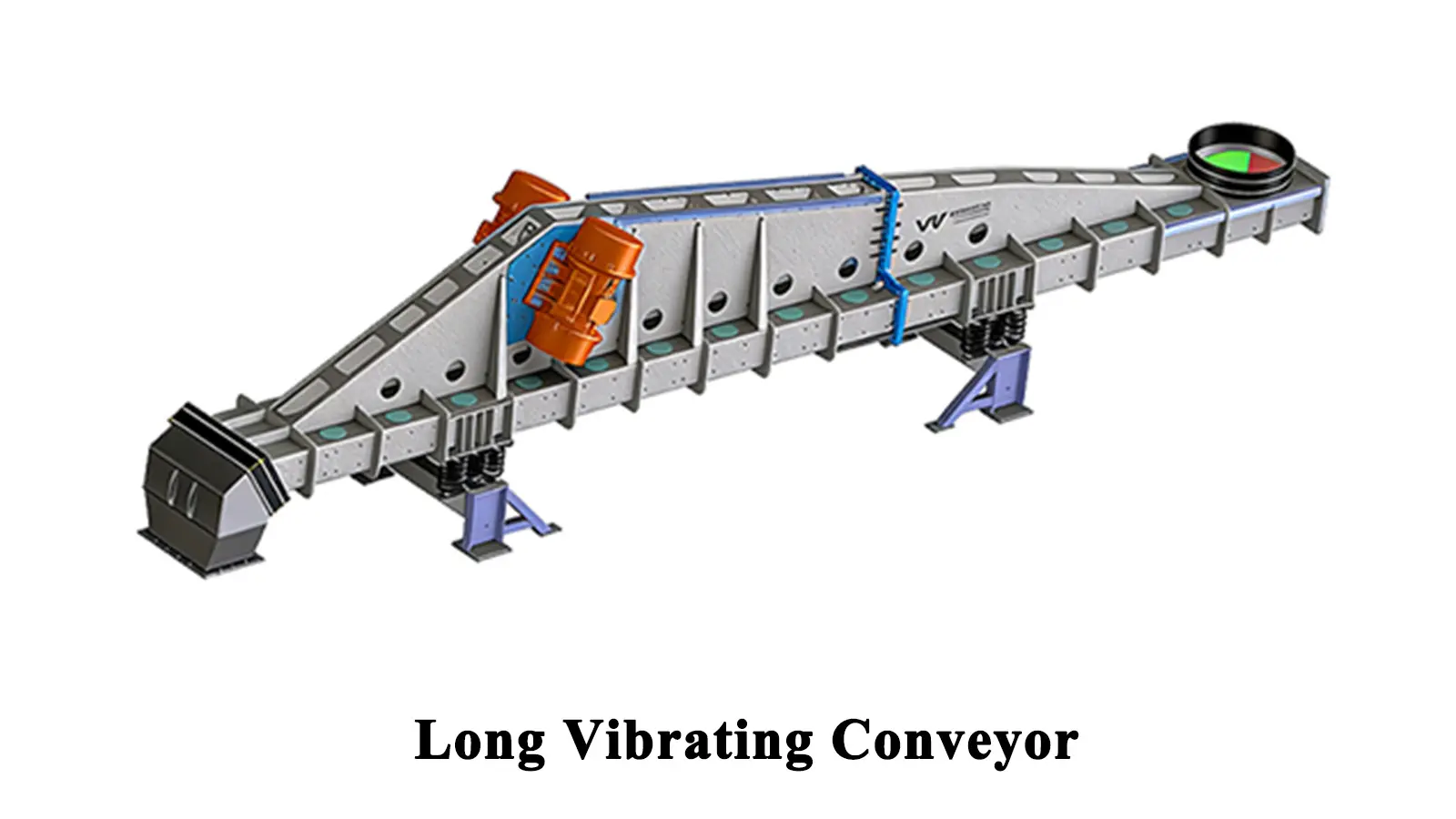
Long Vibrating Conveyor for Long-Distance Bulk Material Conveying
|
Features |
|
1. Suitable for long-distance horizontal and slightly inclined material conveying. |
|
2. Ensures stable and uniform material flow with low operation noise. |
|
3. Fully enclosed structure avoids dust spillage and material contamination. |
|
4. Applicable to various powder, granular and bulk materials in multiple industries. |
|
5. Customizable lengths, sizes and materials for different working conditions. |
7. Bidirectional Vibrating Conveyor
Two-way Vibrating Conveyor is a high-efficiency directional feeding equipment designed with two discharge outlets. It can flexibly switch between two different conveying directions according to actual production needs, while only conveying materials to one direction at a time. Driven by electromagnetic or vibration motors, it ensures stable, uniform and adjustable material flow, effectively coordinating material supply between different production links or processing equipment. With a compact and reasonable structure, it is widely used in mining, metallurgy, building materials, chemical industry, grain and other bulk material handling systems.
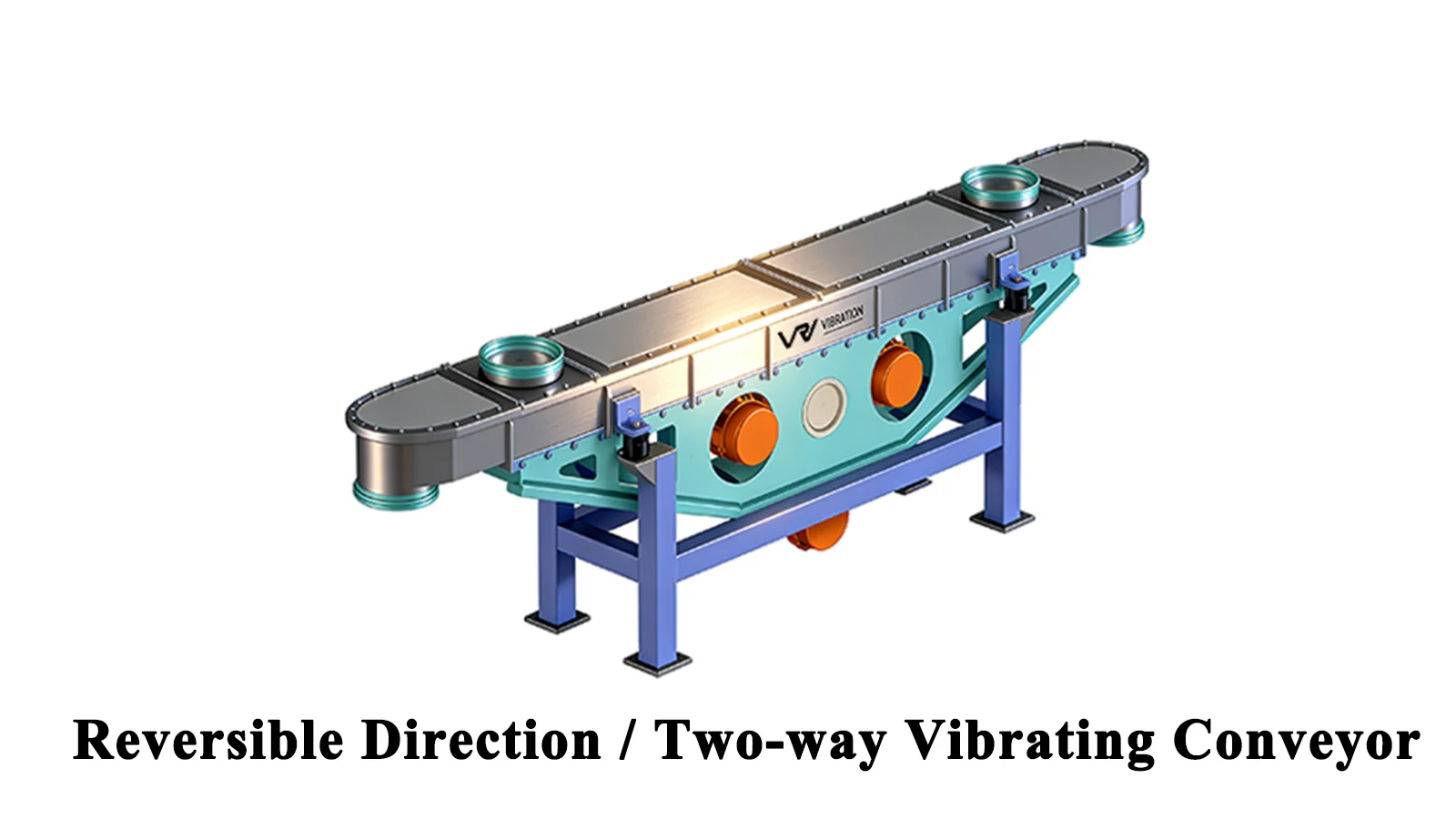
Two-way Vibrating Feeder with Dual Discharge Outlets for Directional Material Feeding
|
Features |
|
1. Equipped with two discharge outlets and supports flexible direction switching. |
|
2. Conveys materials to only one direction at a time for stable and accurate feeding. |
|
3. Provides uniform and adjustable material flow with reliable and smooth operation. |
|
4. Compact structure saves layout space and optimizes production system configuration. |
|
5. Suitable for powder, granular and block bulk materials in various industrial fields. |
If you want to know more about Vibrating Feeder, please click here to download VRV product catalog.
call us :
008617855911791 e-mail : sales@vrvibratory.com


 ipv6 network supported