



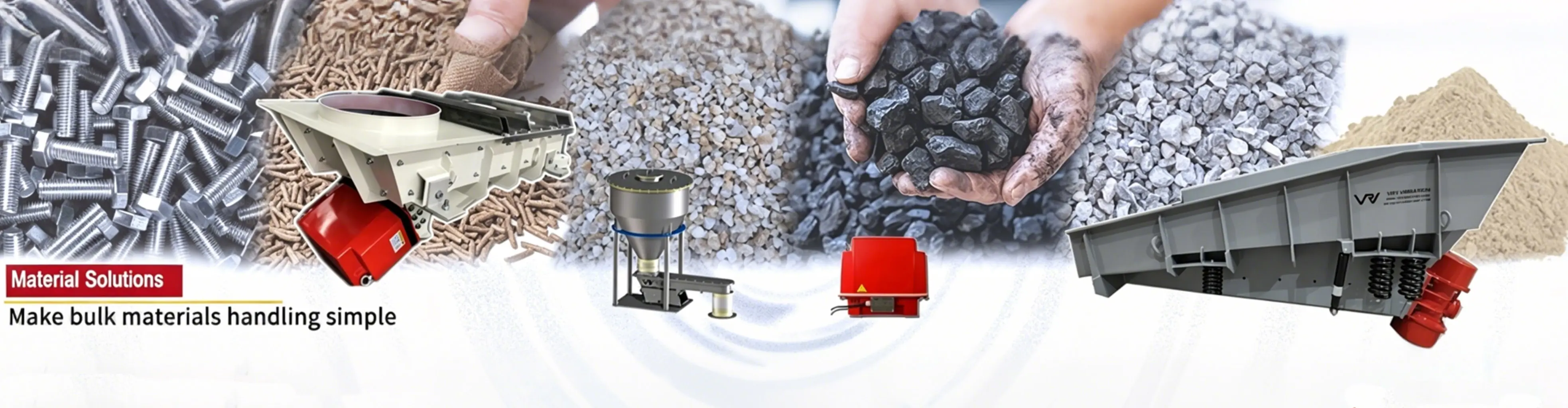
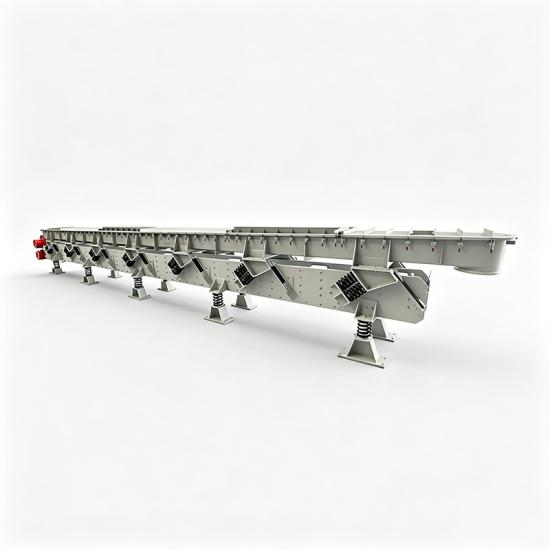
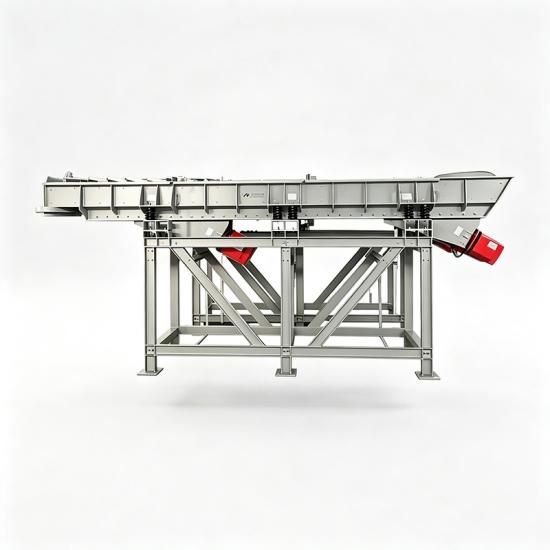
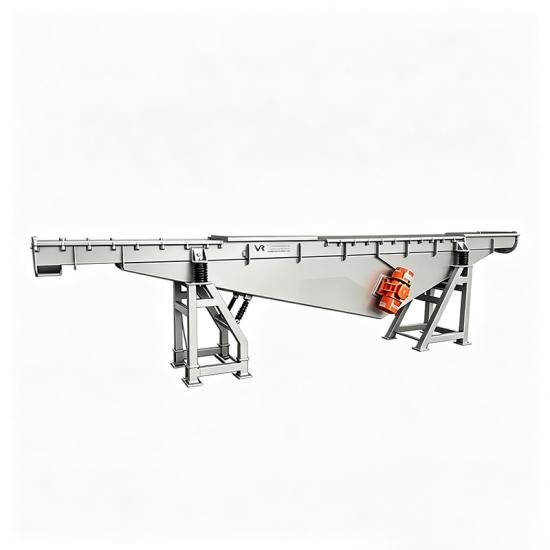
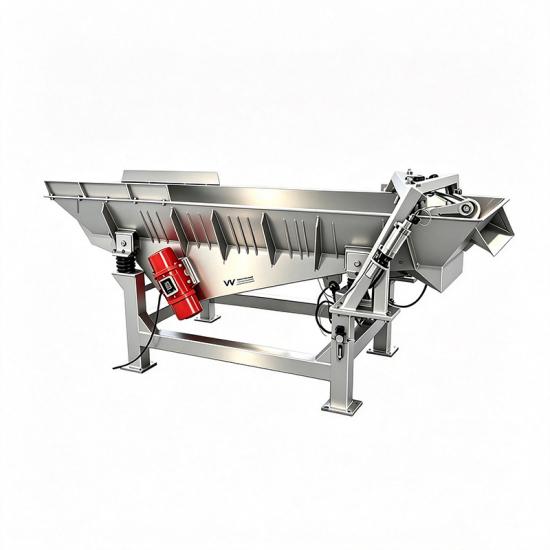
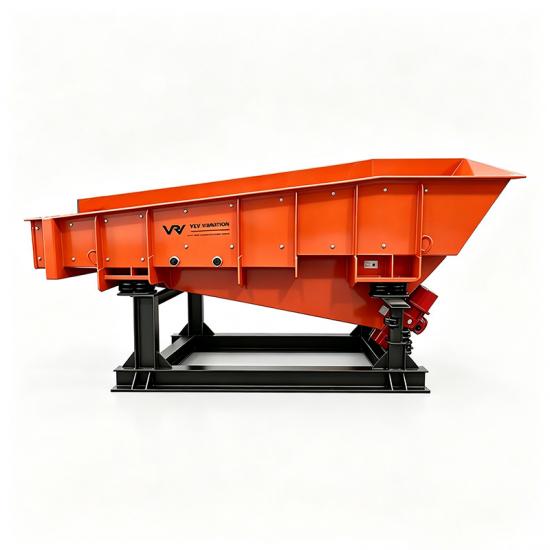
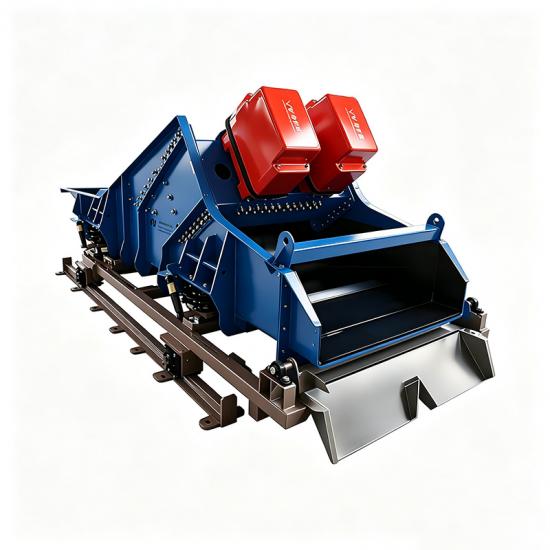
Vibrating Conveyor Overview
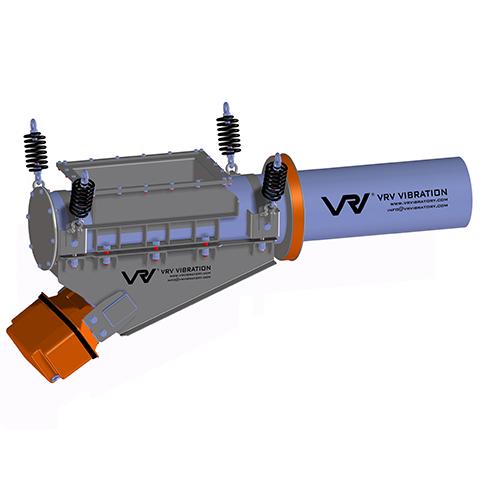
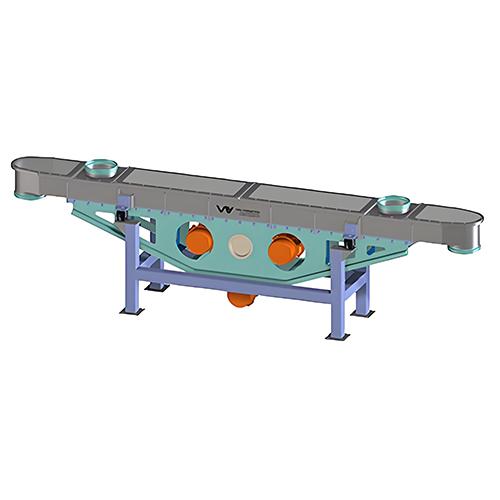
A vibrating conveyor, or vibratory conveyor, relies on vibration exciters to generate controlled oscillation for bulk material conveying. Driven either by vibration motors or electromagnetic systems, the equipment supports horizontal and slightly inclined arrangement according to process layout. Beyond simple material transfer, it can simultaneously perform auxiliary functions such as screening, cooling or dewatering. Fabricated from stainless steel or mild steel, open trough and closed tubular models accommodate different dust control requirements. Thanks to the isolation spring setup, vibration transmission to supporting structures is limited. This makes the conveyor adaptable to mineral, chemical and food processing lines handling powders, granules and abrasive bulk solids.
Vibrating Conveyor Working Principle
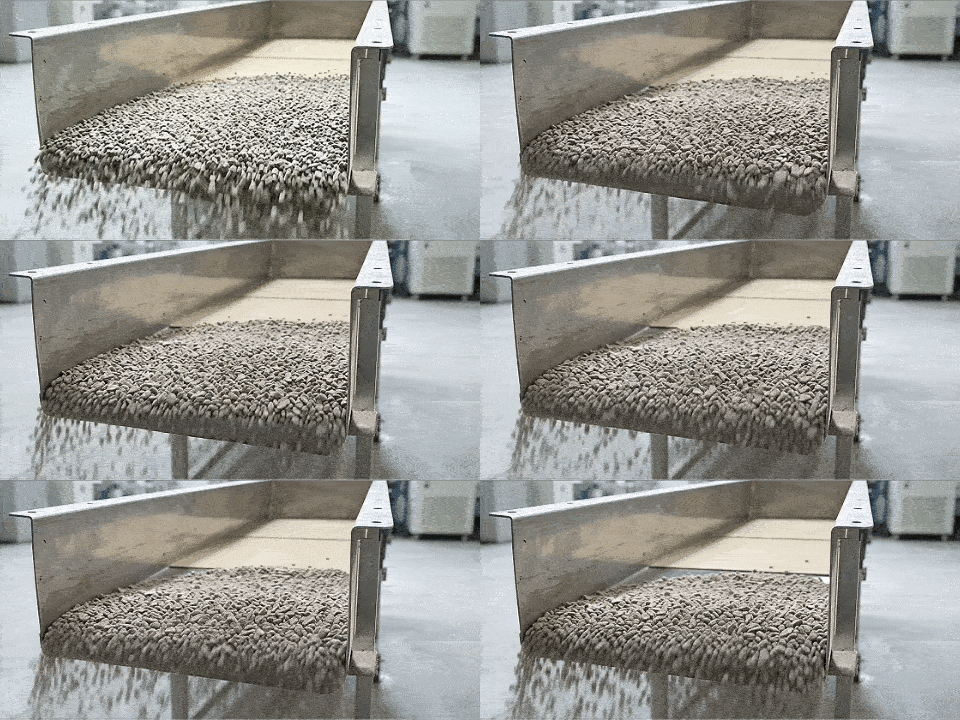
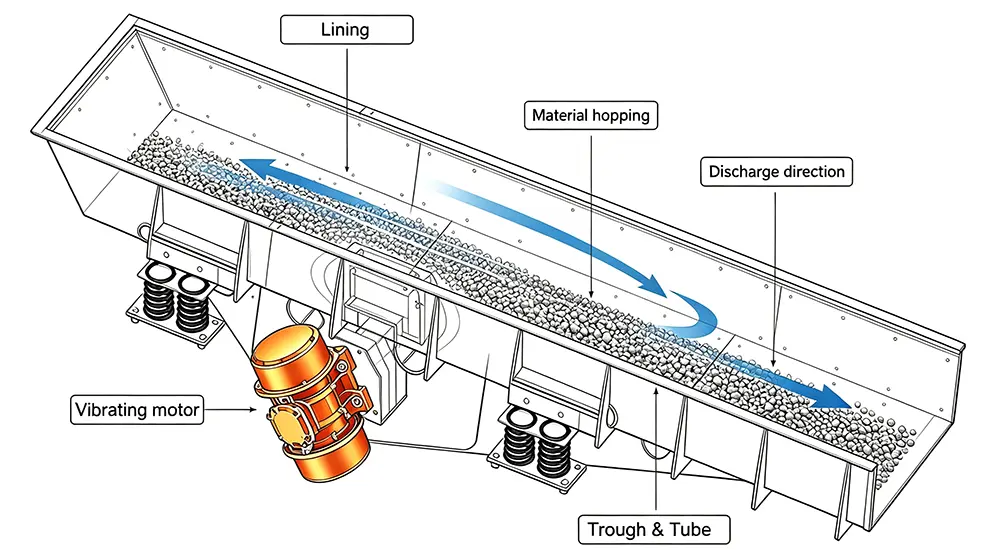
The vibrating conveyor utilises exciters to generate periodic oscillations. Supported by isolation springs, the trough or tube moves along a preset inclined trajectory. When oscillating, the conveying surface accelerates materials upward and forward; once material separates from the surface, it travels forward freely under inertia before landing again. This repeating hopping cycle enables continuous forward movement of bulk solids. The vibration amplitude and frequency can be adjusted to match material properties, avoiding persistent sliding and reducing wear on both the trough lining and raw materials.
Vibrating Conveyor Main Components Introduction
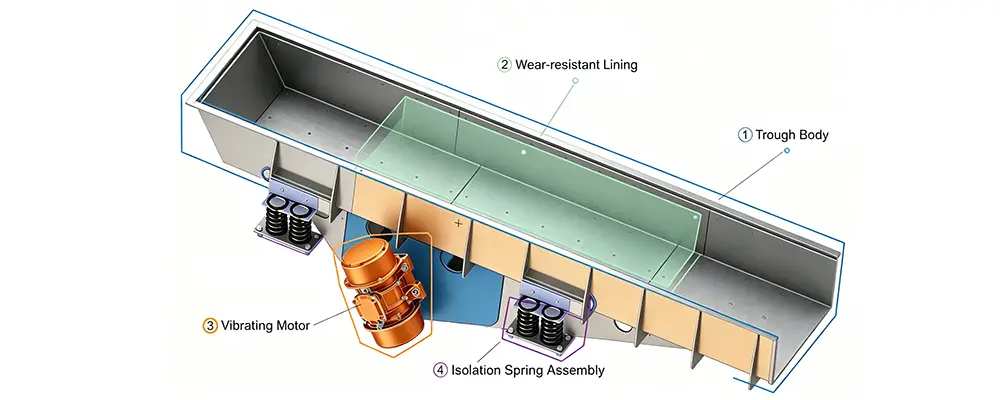
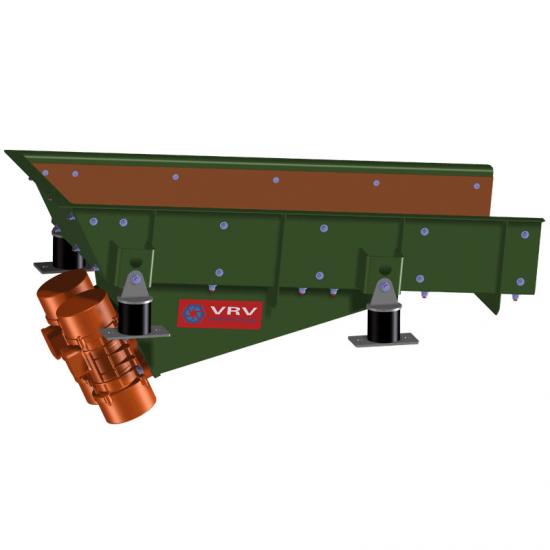
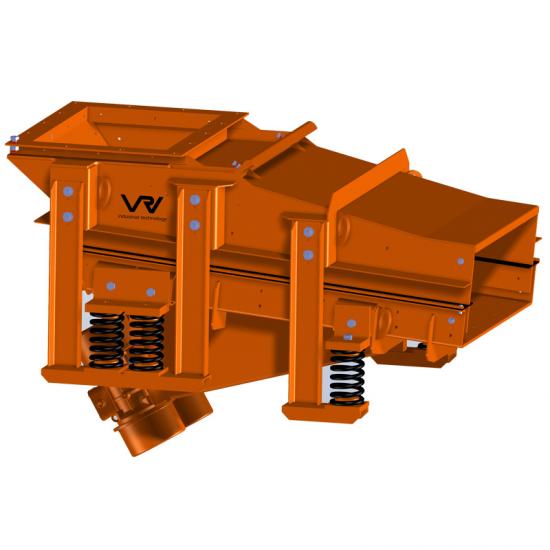
• Trough & Tube
Welded steel main frame with reinforced
ribs, acting as the carrier for bulk materials and mounting base for all
accessories.
• Wear-resistant Lining
Replaceable lining fitted inside the
trough. It bears friction and impact from solids, protecting the trough body
and simplifying maintenance.
• Vibrating Drive
Vibrating Motor or eletromagnetic vibrator for selextion as the excitation source. Rotating eccentric
weights generate periodic vibration force to drive the trough, enabling
continuous material hopping conveying.
• Isolation Spring Assembly
Elastic support for the trough. It allows
free oscillation of the equipment and isolates vibration transmission to
foundations, preventing resonance.
Vibrating Conveyor Advantages
• Gentle material handling
Materials travel via continuous
low-amplitude hopping motion. Fragile granular materials suffer minimal
crushing compared with screw conveyors or belt conveyors.
• Robust & low-maintenance construction
Only the lining plate directly contacts raw
materials. No chains, belts or rollers inside the trough. Replaceable wear
lining reduces long-term service expenses.
• Wide material adaptability
Suitable for granular, powdery, crystalline
bulk solids; handles abrasive, normal-temperature or moderately hot materials.
Works under dry and slightly humid working conditions.
• Flexible structural selection
Open trough for easy observation; sealed
enclosed structure to control dust emission and meet environmental protection
requirements.
• Adjustable throughput
Conveying speed and capacity can be
conveniently modified by tuning the vibration motor excitation force.
• Anti-blocking & self-cleaning effect
The continuous oscillating movement
inhibits material caking and adhesion on the trough surface, lowering blocking
probability.
• Good vibration isolation performance
Equipped with isolation spring assemblies.
Vibration is largely confined within the equipment, avoiding resonance of
supporting steel structures and reducing on-site noise.
• Layout flexibility
Capable of horizontal transportation or
small-angle upward/downward inclined transportation to match different process
layouts.
Selection Guideline & Key Technical Parameter
• Feeding capacity: Determine the required feeding capacity based on production needs and select the appropriate model of feeder. The general production capacity is calculated based on the bulk density of the material. If conveying powdered materials, its conveying capacity may decrease.• Conveying distance: The central distance from inlet to outlet.
• Information of bulk materials: Name, particle size, bulk density and so on.
• Shape: Trough or tube type, open or enclosed?
• Material contruction: Stainless steel, mild steel or other non-metallic material
• Surface treatment: Paint coated, sandbalsting, polishing or mirror finishing?
• Installation method: Depending on the actual site and process requirements, suspended or seated installation methods can be selected to ensure that the equipment is installed firmly and runs stably.
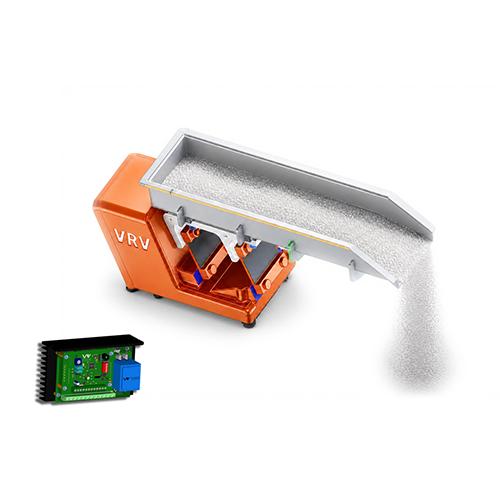
• Control mode: According to the requirements of production automation level, choose a matching ordinary control box to achieve manual stepless adjustment, or a matching automatic control box to achieve manual and automatic adjustment.
More special question, please feel free to contact VRV.
|
Length |
Up to 210000 mm |
|
Width |
Up to 2000 mm |
|
Capacity |
0-1000 tph |
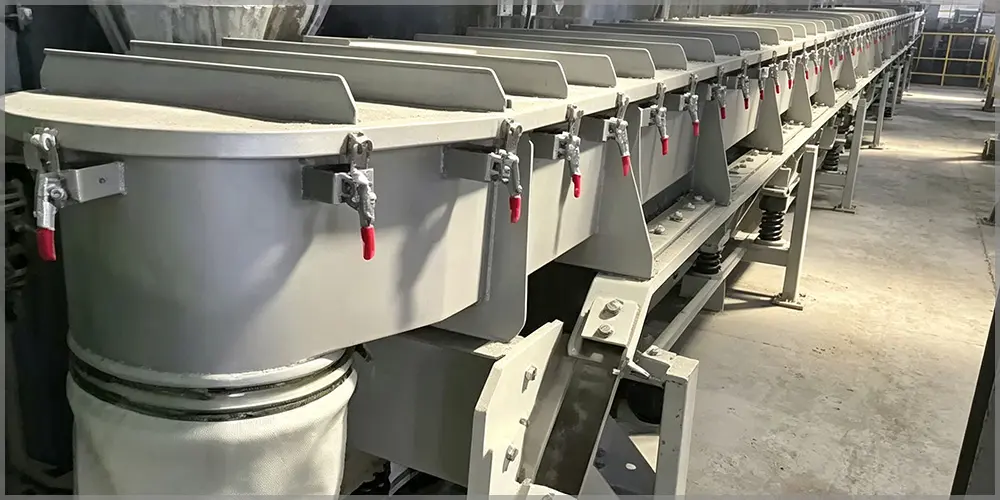
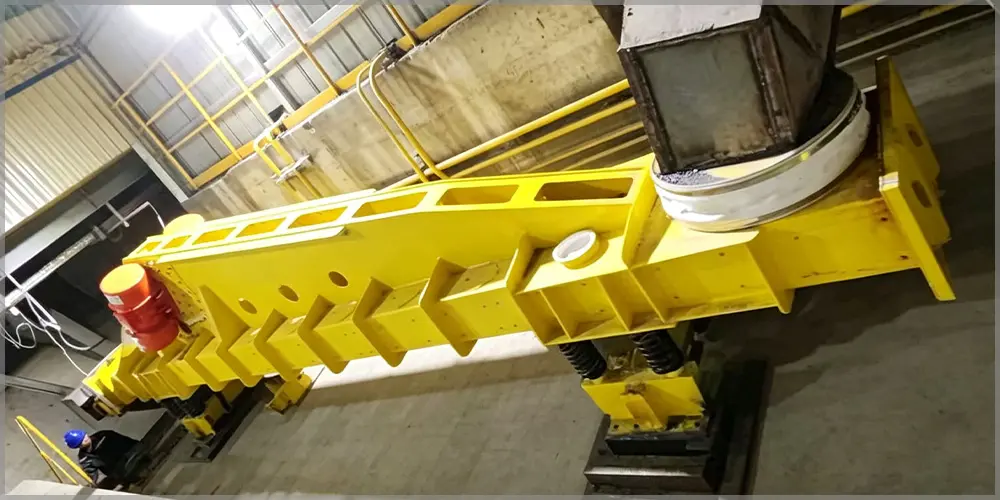
Vibrating Conveyor Application & Working Site
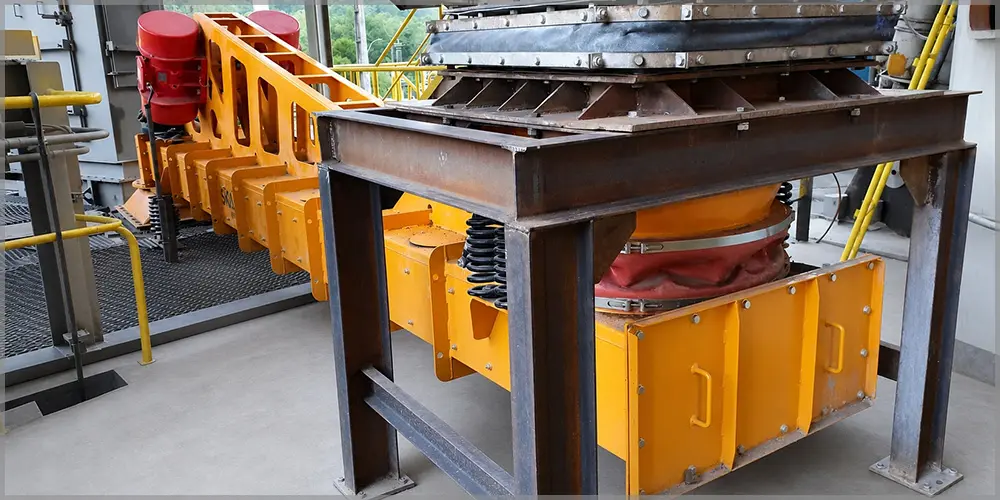
How to choose the most suitable vibrating conveyor?
1, Know the information of material conveyed, and the requirement of device. (Click here to learn more)
2, Vibrator is the core part of the vibrating feeder, Choosing a strong vibrator which has stable vibration force and long usage time or choosing a weak vibrator which has cheap price but weak vibration force, frequent maintenance wasting time and money, I believe you can make a right choose.
3, After sales service is the guarantee of using the product, you need confirm with manufacturer about it before signing contract.
4, Investigate supplier information, prioritize manufacturers over intermediaries, and learn about project cases related to related products.
FAQ
Q1: What materials can a vibrating conveyor handle?
A: It transports bulk solids including
granules, powders and lumpy materials, widely used in mining, chemical, food
and building materials industries.
Q2: What are the core advantages of
vibrating conveying?
A: Gentle material transportation, low risk
of material crushing; open or tubular trough options available, simple
structure and low maintenance demand.
Q3: Can vibrating conveyors operate under
high temperature conditions?
A: Custom high-temperature resistant
versions are available for hot material transport. Please provide material
temperature data for configuration.
Q4: Is it possible to adjust the conveying
speed during operation?
A: Yes. Conveying capacity and speed can be
continuously adjusted via frequency conversion control.
Q5: What is the difference between
vibrating conveyor and vibrating feeder?
A: Vibrating conveyor is designed for long-distance continuous material transport. Vibrating feeder mainly controls uniform feeding from silos.
The
reason why you choose vibration conveyor in VRV?
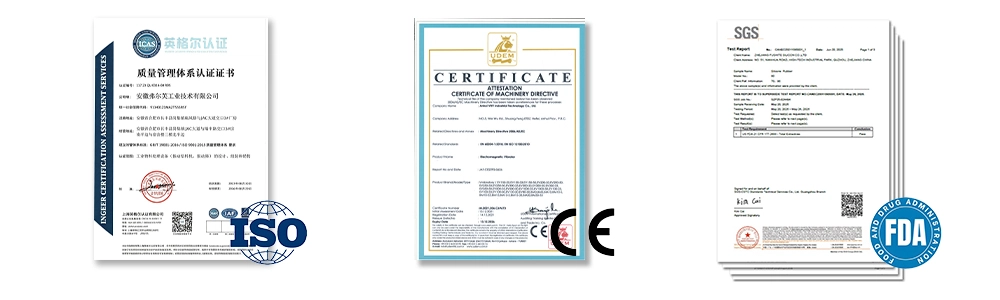
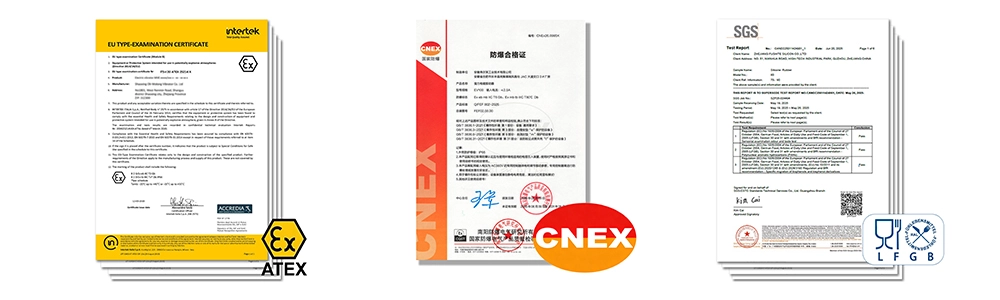
As a profeesional Vibrating conveyor manufacturer, VRV provides custom vibrating conveyor for sand, mineral, chemical and food bulk materials. We own ISO system certification, all vibrating conveyors meet CE standards with optional explosion-proof and food-grade certifications.
Our vibrating conveyor features low-noise VFD control, dust-proof sealing, gentle material conveying, and offers heavy-duty, FRP-lined and high-temperature resistant options. Supported by one-stop design, production, testing and global after-sales service, our vibrating conveyors are shipped to Southeast Asia, Europe, North America and South America. Contact VRV for tailored vibrating conveyor solution
1, Choosing a cheap vibrator with weak quality, you would spend more time and money to maintain it. It even can’t vibrate to convey well. Stop doing it!
• VRV grasp core technology in electromagnetic vibrator, which can provide stable and long-time vibration force, and help you convey material well without maintenance.
• VRV experts know how to design the structure and shape of the trough, as well as the installation angle of the vibrator, in order to improve conveying efficiency without damaging the slot.
2, VRV can offer you the most competitive price. VRV is a manufacture in China so that we have our own service team and production line, and we can minimize production costs to the greatest extent possible.
3, VRV provides at least one year of quality assurance and permanent technical support. You can ask us for help anytime.
4, VRV has rich experience and owns large market share in typical industries especially in glass, food, chemistry, coal mining industries. We have been involved in lots of projects worldwide.



 ipv6 network supported