



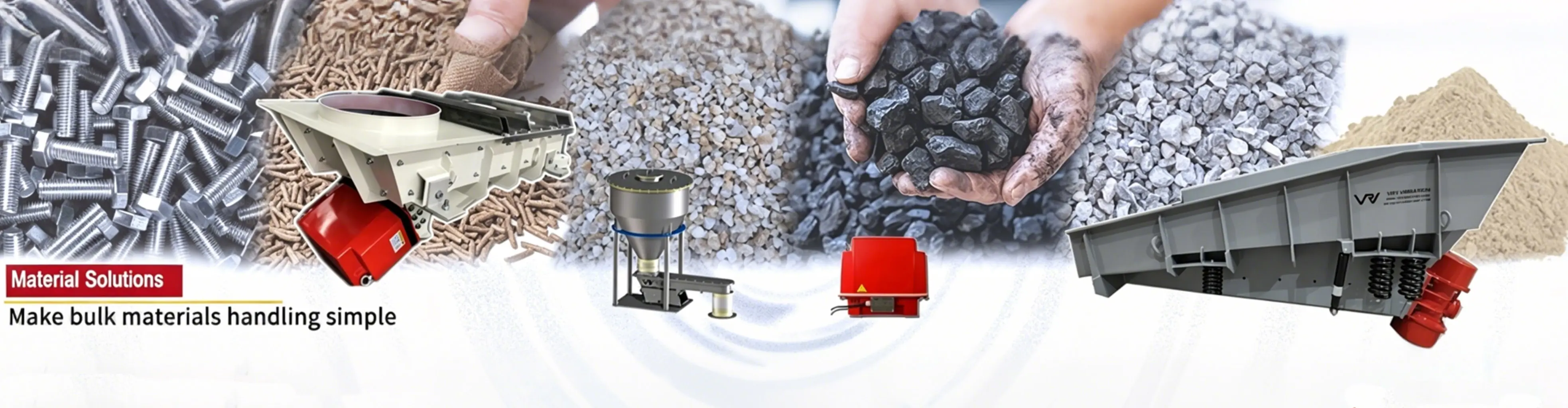
Vibrating Feeder Working Principle
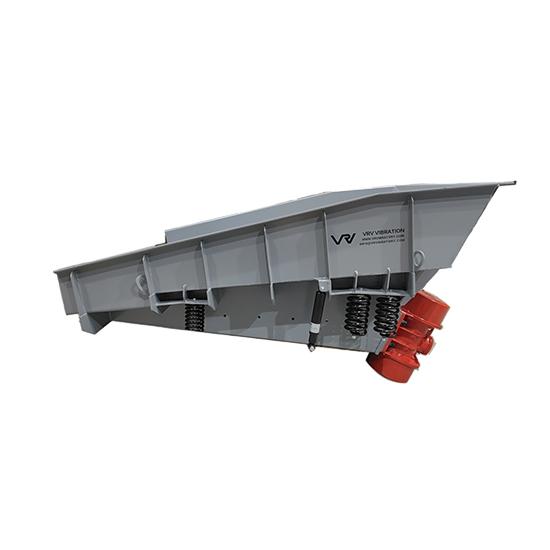
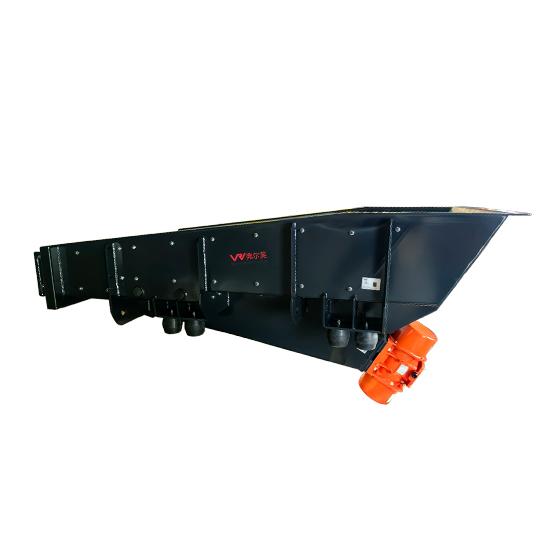
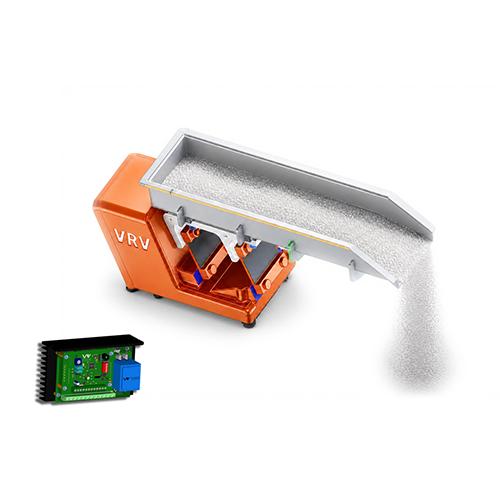
The core of the working principle of the vibrating feeder is to utilize the exciting force generated by the vibrating motor, causing the tray or tube to perform periodic vibrations in a specific direction. Under the action of vibration, the materials overcome the frictional force between themselves and the trough, moving forward in a continuous and uniform trajectory. Eventually, quantitative feeding from the silo to subsequent equipment (such as crushers, conveyors) is achieved. Its vibration frequency and amplitude can be controlled by adjusting the motor parameters, thus adapting to the conveying requirements of different materials.
Vibrating Feeder Design
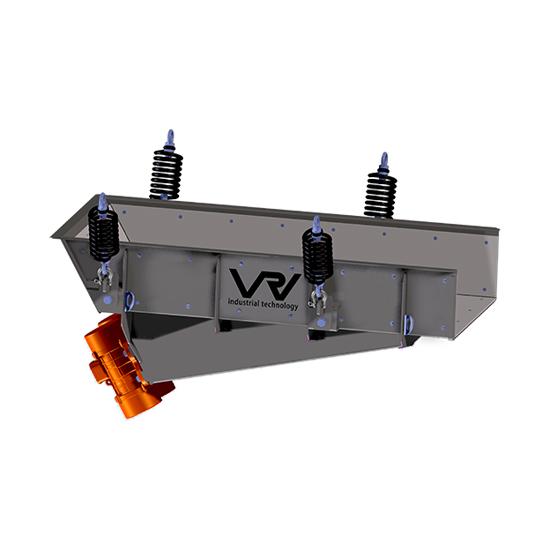
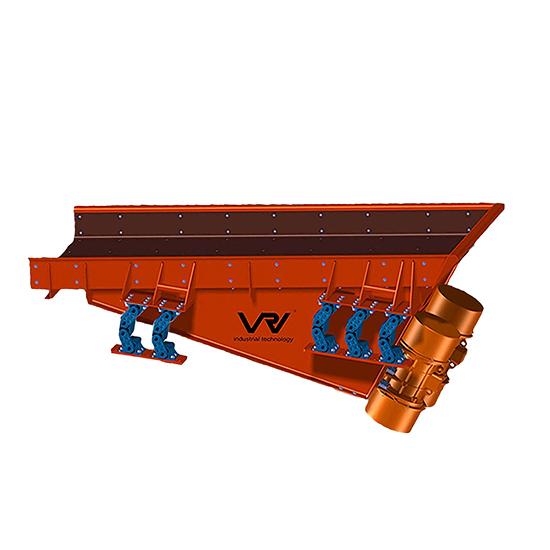
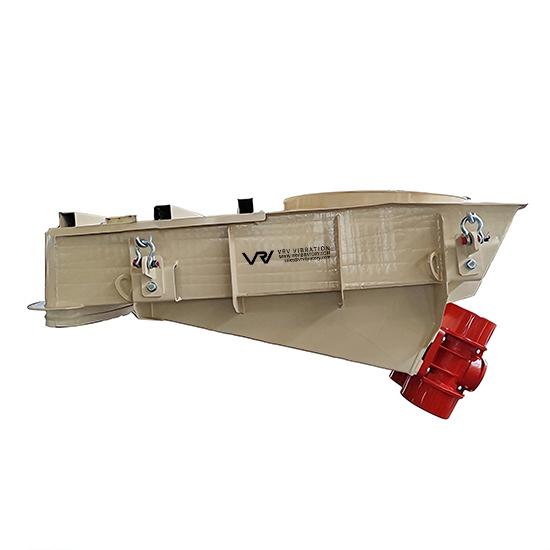
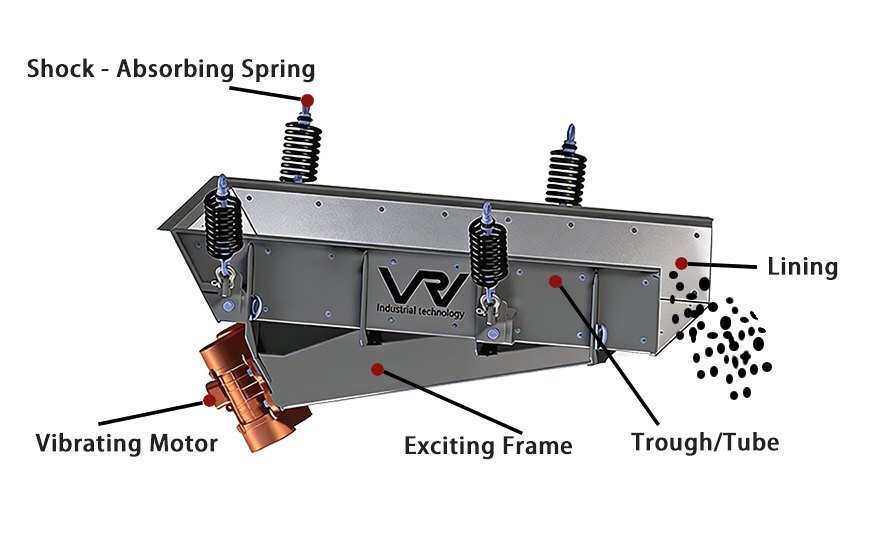
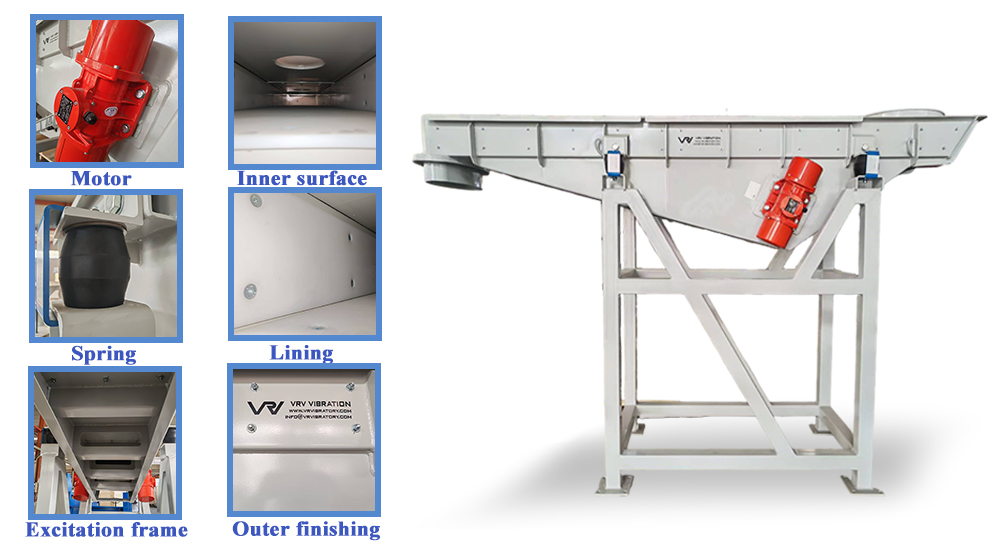
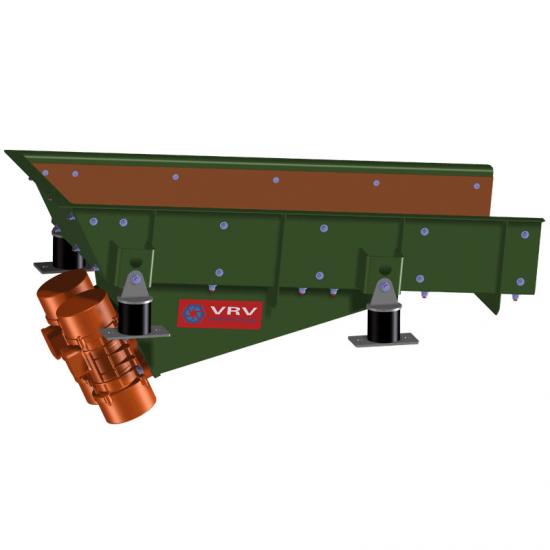
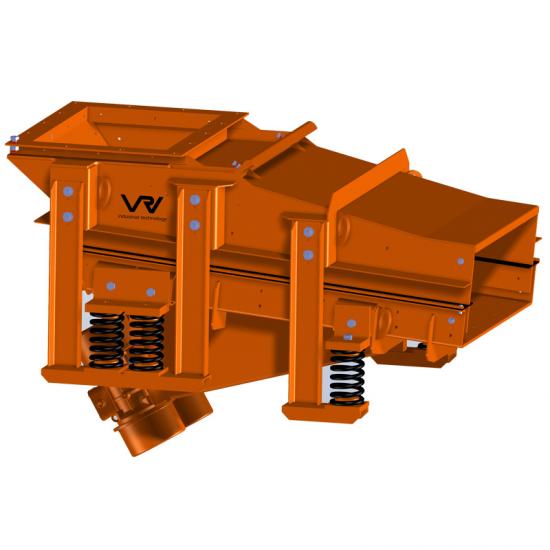
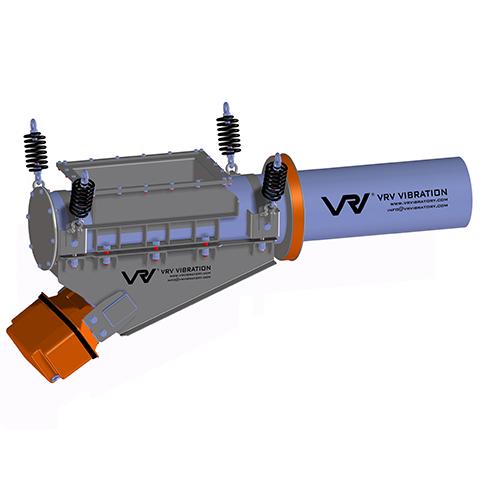
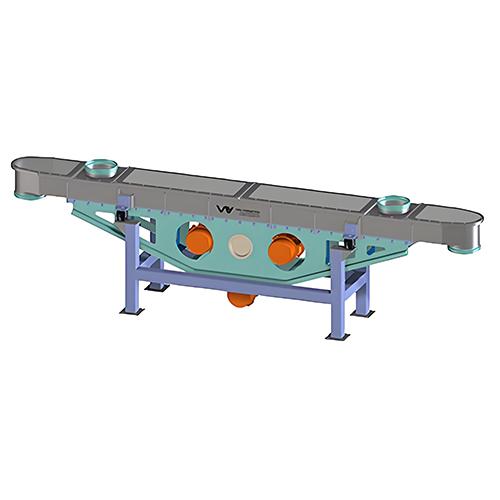
The vibrating feeder is mainly composed of components such as vibrating motors, exciting frames, trays/tubes, shock - absorbing springs, wear - resistant linings, and supports.
Vibrating Feeder Specification
The VRV vibrating feeder supports all - round customized services. According to customers' core demands such as actual production scenarios, material characteristics (such as particle size, humidity, specific gravity), capacity requirements, and installation space limitations, it can flexibly adjust the equipment's model specifications, inlet size, discharge speed, vibration frequency, body material (such as ordinary carbon steel, stainless steel, wear - resistant alloy), and auxiliary function configurations. It tailors a more adaptable feeding solution to fully meet the personalized production needs of different industries (such as mining, building materials, chemical engineering, metallurgy, etc.), helping to improve production efficiency and material conveying stability.
|
Length |
Up to 12000mm |
|
Width |
Up to 3500m |
|
Capacity |
Up to 2000tph |
|
Drive Type |
Vibrating motor or Electromagnetic vibrator |
|
Installation Angle |
0-5° |
|
Body Material |
Mild steel, Stainless steel or other non - metallic materials |
|
Surface treatment |
Polishing, Painting, blasting and so on |
Vibrating Feeder Selection
The
selection of a vibrating feeder directly determines production efficiency,
operational stability, and overall costs, and is a crucial part of the smooth
operation of a production line. Improper selection can lead to problems such as
limited production efficiency and increased equipment wear and tear. In order
to select a more suitable vibrating feeder, we need to understand the following
issues:
1. Materials
Vibrating
feeders mainly handle bulk materials, including powdered, granular, lumpy, and
some viscous materials.
‣ Ore
category: iron ore, limestone, granite, basalt, coal, coke, etc.
‣ Building
materials category: cement, sand and gravel, aggregates, gypsum, brick and tile
blanks, etc.
‣ Chemical
category: fertilizers, soda ash, salt grains, chemical powders (without strong
corrosiveness and stickiness), etc.
‣ Grain
category: granular grains such as wheat, corn, paddy, soybeans, and feed raw
materials.
‣ Other
categories: slag, tailings, construction waste, metal debris, and other
recycled or industrial waste.
2. Material Size
3. Material Bulk Density
4. Vibrating Feeder Structure
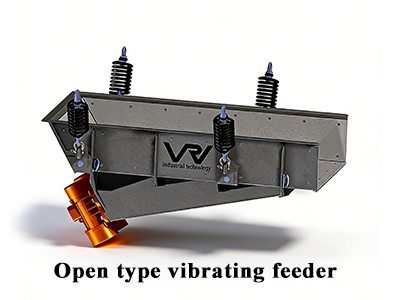
‣ Open
Vibrating Feeder: It has a simple structure, which makes installation,
inspection, and daily maintenance convenient. It is easy to observe the
material conveying status, facilitating timely adjustment. It is suitable for
work sites where there are large - sized particles and lumpy materials, as it
is less likely to get blocked and has a relatively low requirement for
airtightness.
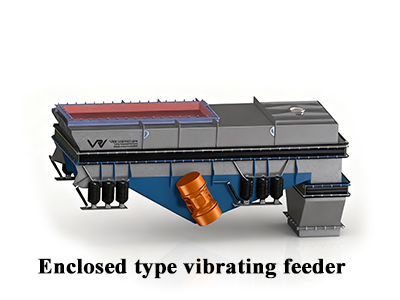
‣ Enclosed Vibrating Feeder: Effectively prevent materials from getting damp or being contaminated. Effectively prevent dust leakage, and it is suitable for conveying materials that are prone to dust - raising, toxic, corrosive, or valuable.
5. Conveying Capacity
6. Main material
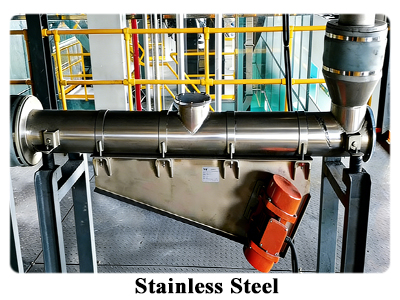
‣ The stainless - steel vibrating feeder, which
has the advantages of corrosion and wear resistance, easy cleaning and
disinfection, and meets the hygienic standards of industries such as food and
medicine. It has a simple structure, convenient maintenance, smooth operation
with low noise. The uniform and quantitative feeding can be achieved by
adjusting the exciting force. It can also be flexibly designed into different
structures according to the needs of the production line and is suitable for
various installation scenarios. It can widely convey various materials such as
acidic, alkaline, and wet materials, and is suitable for the batching,
metering, and other links of automated production.
7. Conveying distance
8. Inlet and outlet dimension
9. Surface Treatment
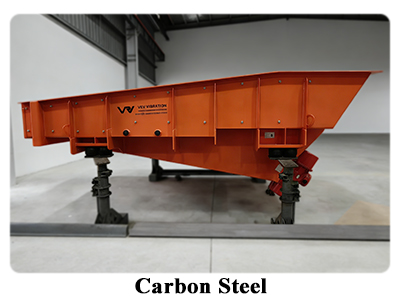
‣ The surface
treatment of carbon - steel vibrating feeders mainly aims to prevent corrosion,
improve wear resistance, enhance appearance, or endow specific functions.
Common methods include painting, metal plating protection, inner lining and
sandblasting.
‣ Stainless -
steel vibrating feeders already have good corrosion resistance. Their surface
treatment is more about enhancing the appearance texture, strengthening
corrosion resistance, reducing surface roughness, and eliminating processing
defects. The common treatment methods are as follows: pickling and passivation,
sandblasting, polishing, and wire - drawing treatment.
10. Other Requirement
‣ Explosion-proof
motor
‣ Lining
‣ Installation
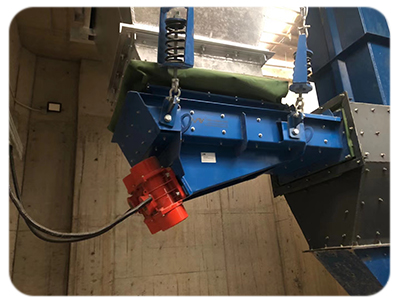
method: Support from floor or Suspension
‣ Speed
control FC
Vibrating Feeder Advantages
1.
Uniform and stable feeding
The
feeding capacity can be precisely controlled by adjusting the vibration frequency
and amplitude. It is less likely to have situations such as material blockage
and feed interruption, which is suitable for the continuous operation
requirements of automated production lines.
2.
Wide range of applicable materials
It
can smoothly convey not only granular, powdery, and block bulk materials, but
also wet and materials with relatively low viscosity, featuring strong
versatility.
3.
Simple structure and easy maintenance
The
whole machine has few components and no complex transmission mechanism. Daily
cleaning and maintenance are convenient, with a low failure rate and relatively
low maintenance costs.
4.
Low energy consumption and low noise
Driven
by vibration motors, it has low power consumption. Moreover, the vibration
noise during operation is relatively lower than that of traditional feeding
equipment, causing less impact on the working environment.
5.
Flexible and convenient installation
It has a compact size and can be installed horizontally or inclined. It can be flexibly connected with equipment such as crushers and screeners, adapting to different production layouts.
Vibrating Feeder Application
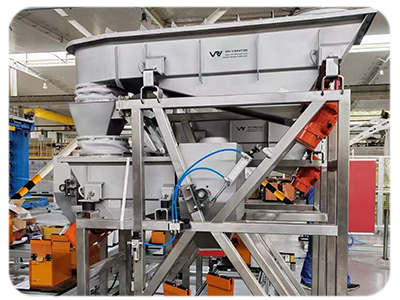
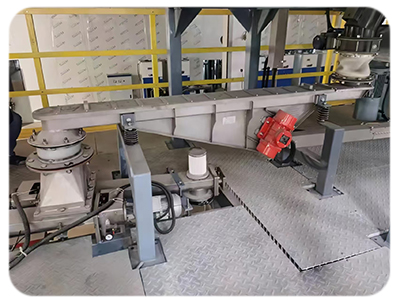
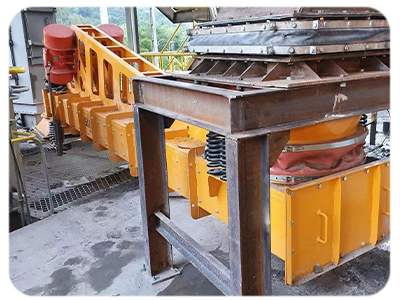
With its core advantages of continuous and uniform feeding, precise control of the feeding amount, and adaptability to various materials (granular, powdered, and block), the vibrating feeder is widely used at the front end of production lines in industries such as mining, metallurgy, building materials, and chemical engineering. It can not only match the processing rhythms of equipment like crushers and screeners, but also prevent problems such as material blockage and jamming, reducing equipment wear and tear. Moreover, it can achieve automated batching through frequency conversion adjustment, helping customers improve production line efficiency, stabilize product quality, and reduce labor costs.
FAQ
Q1:
What are the differences in model selection between heavy - duty for mining and
light - duty for food - grade applications?
A1:
For heavy - duty mining applications, choose a thickened trough body + wear -
resistant liner, high - strength springs and a heavy - duty vibrator. The
foundation needs to be reinforced and sufficient buffer space should be
reserved. For food - grade applications, select stainless - steel materials, a
structure that is easy to disassemble and clean, with no sanitary dead -
corners. The amplitude and frequency should be moderate to avoid material
splashing and accumulation. When necessary, equip with a dust - proof / cross -
contamination - proof cover.
Q2:
How to choose between suspended - type vibrating feeder and seated - type vibrating feeder installation?
A2:
The seated - type has good rigidity and is convenient for maintenance, which is
suitable for fixed workstations and heavy - duty applications. The suspended -
type is suitable for scenarios with limited space and the need to fine - tune
the inclination angle. It is necessary to ensure that the lengths of the
suspension rods are the same and the tension is uniform to avoid lateral swing.
Q3:
What should be done if the vibrating feeder does not vibrate or operates intermittently
after startup?
A3:
First, check the electrical parts: fuses, coils, terminal blocks and grounding,
and eliminate short - circuits / open - circuits / single - phase operation.
Then, check the mechanical parts: whether the protective cover rubs against the
eccentric block, whether the vibrator is stuck, and whether the springs are
broken. Finally, confirm whether it is started with load. Empty the trough and
try again.
Q4:
What should be done if the feeding is uneven, sometimes more and sometimes
less?
A4: First, stabilize the incoming material and the material level in the silo to avoid impact and feed interruption. Then, adjust the vibration parameters (amplitude / frequency / exciting force) to ensure that the rotation directions of the two motors are opposite and the phases are consistent. Check whether the trough body is deformed, whether the liner has fallen off, and whether the springs are fatigued. Correct or replace them when necessary. For wet and sticky materials, control the humidity and install arch - breaking or anti - blockage devices.
Vibrating Feeder manufacturer and supplier
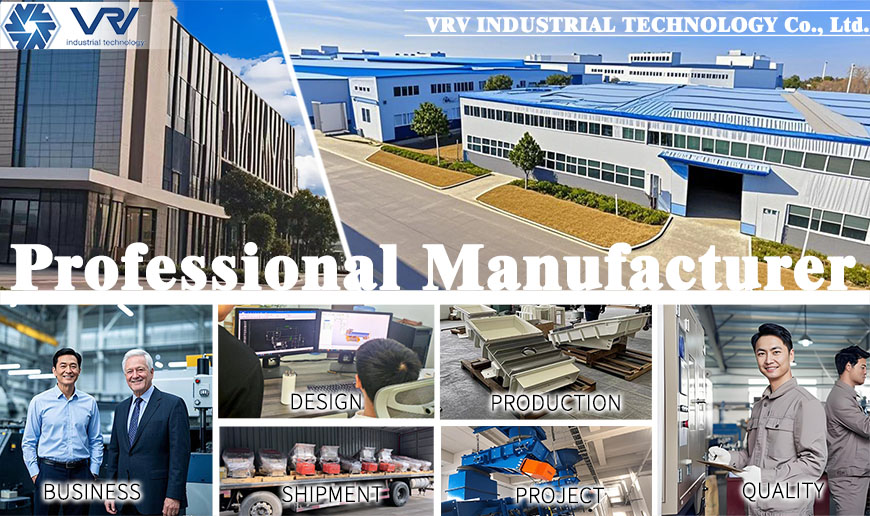
VRV is a professional Vibrating Feeder Manufacturer from China, and we can customize all kinds of electromagnetic vibrating feeder as required.
1, Technology: VRV has mastered the core technology of vibration equipment. High-quality electromagnetic vibrators make the vibration force more stable and long-lasting. Scientific structural design improves conveying efficiency and reduces the damage caused by vibration to equipment;
2, Price: The production equipment, materials, and personnel are all from China, with more competitive prices;
3, After-sale service: One year warranty period; Permanent technical support;
4, Experience: VRV has extensive experience of vibrating equipment, applied to various industries, cooperating with hundreds of domestic and foreign enterprises.



 ipv6 network supported