



Standard or Custom Bulk material
What is better for your project?
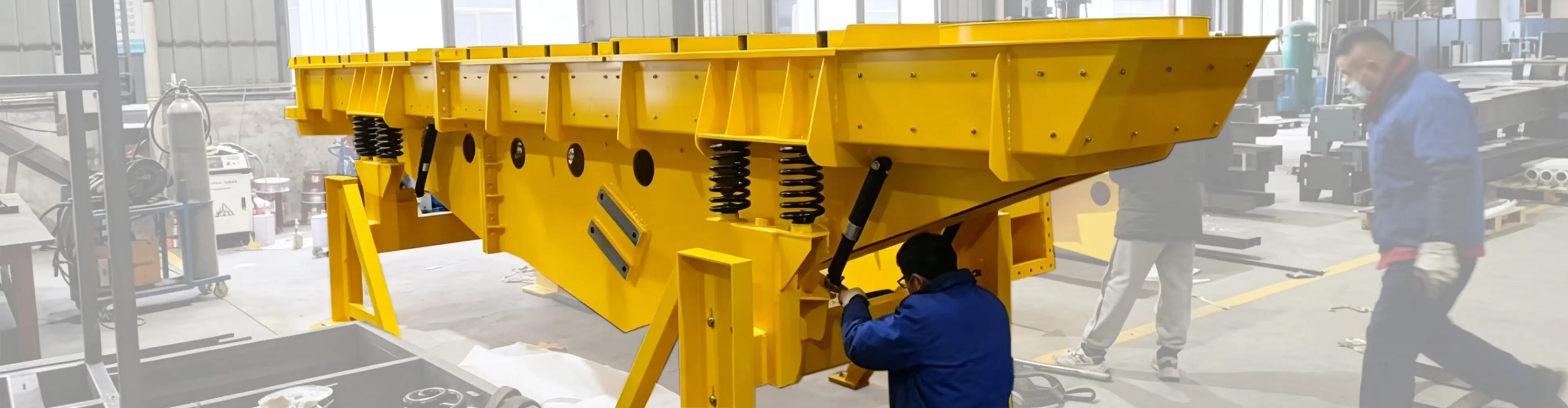
If you work in mining, quarrying, mineral processing, metallurgy or bulk solids handling, you have likely relied on a vibrating feeder to maintain steady material flow from silos, hoppers or stockpiles to downstream crushers, screens and sorting equipment. Among common feeder styles, the trough vibrating feeder stands out for heavy-duty abrasive applications, where impact and sliding wear quickly consume ordinary feeding equipment.
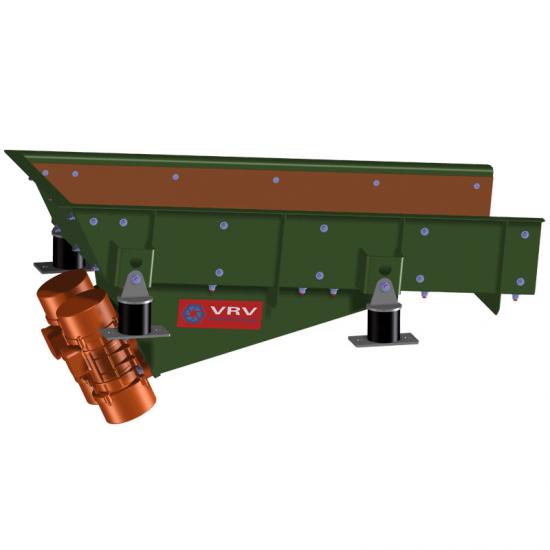
At VRV, we design motor-driven trough vibrating feeders built around one critical truth: wear protection is not a one-size-fits-all solution. Different zones inside the trough suffer completely different wear patterns, which is why our dual-liner configuration separates impact protection from conveying protection.
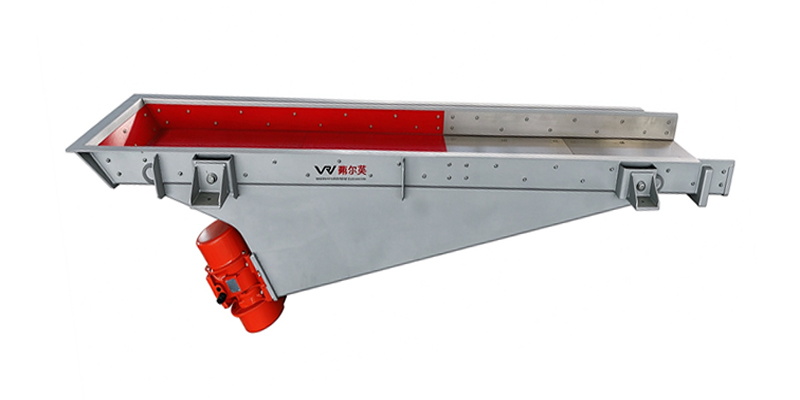
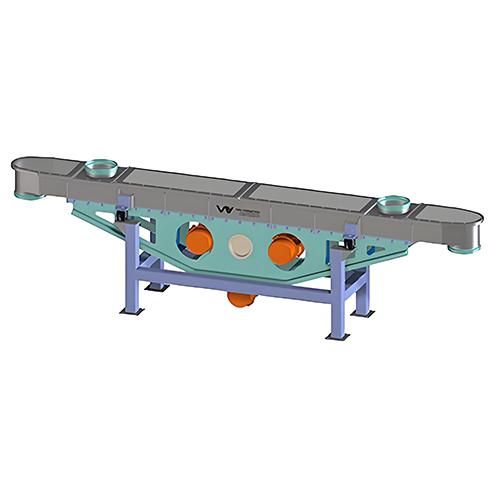
A trough vibrating feeder uses two vibration motors as its excitation source. Synchronized rotation of eccentric blocks inside the motors creates a directional linear exciting force. This force drives the entire trough to perform small, rapid reciprocating vibration.
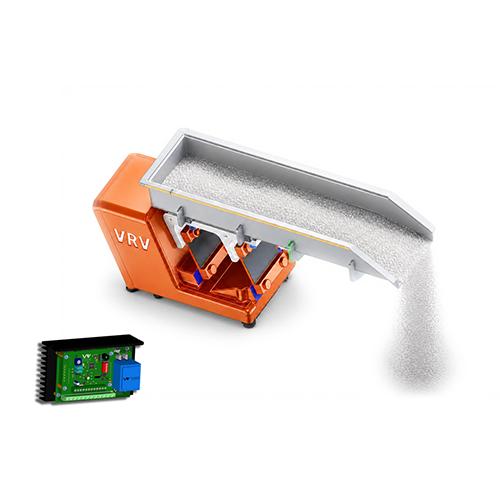
Bulk ore, aggregates or granular material inside the trough repeatedly lifts and slides forward with each vibration cycle. Operators adjust feeding throughput easily via frequency inverters, matching the feed rate to the capacity of your crushing and screening circuit.
Unlike belt feeders, there is no flexible belt to tear or stretch. Unlike screw feeders, there is no risk of blockage with large, sharp rock particles. This simple mechanical layout makes the trough vibrating feeder ideal for continuous 24/7 operation in harsh mineral processing environments.
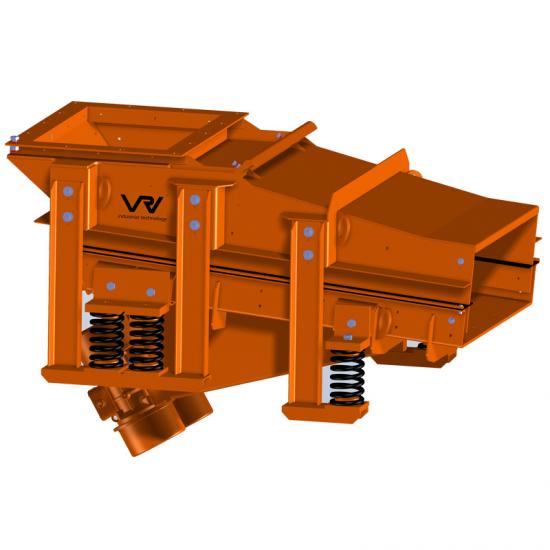
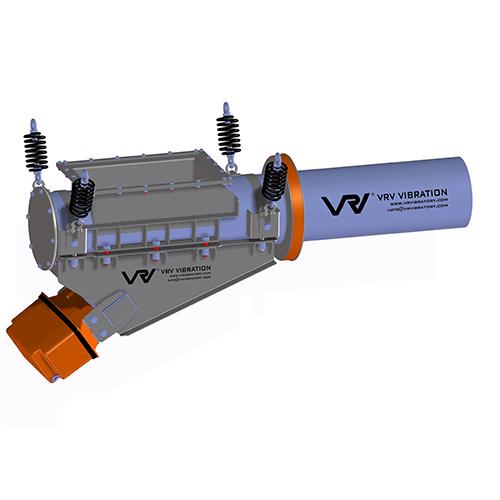
The whole machine can be broken down into four main assemblies:
The most service-critical part is not the frame or motor — it is the replaceable liner system bolted to the trough interior.
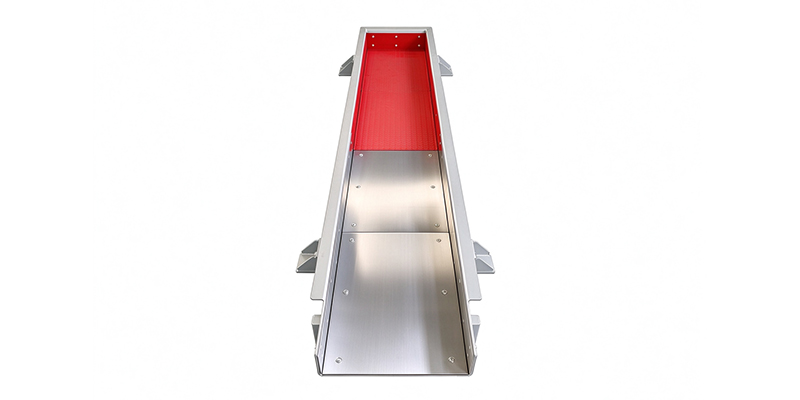
Most standard vibrating feeders are lined with only one grade of wear plate across the whole trough. This creates a compromise: either you overspend on full hardfacing for areas with mild sliding wear, or you install general steel liners that fail rapidly at the high-impact inlet zone.
Our optimized layout solves this imbalance:
All liners are bolt-on replaceable. When wear thresholds are reached, maintenance teams swap individual plates without removing the entire feeder body. This cuts downtime and reduces long-term operating expense.
This style of trough vibrating feeder suits high-abrasion bulk materials including crushed stone, granite, basalt, iron ore, coal, mineral aggregates and metallurgical slag. It is widely deployed before primary jaw crushers, cone crushers and multi-deck vibrating screens.
We customize trough width, length, liner thickness and mounting style to match your material density, maximum lump size and required tonnes-per-hour capacity.
A well-engineered vibrating feeder is far more than a simple material chute. Its liner strategy directly decides your plant’s uptime, spare parts budget and overall production stability. The zone-split hardfaced plus wear steel liner design gives you balanced durability and cost efficiency for abrasive feeding duties.
If you are evaluating a trough vibrating feeder for your crushing or mineral processing line, contact VRV for technical drawings, liner layout recommendations and a quotation tailored to your material conditions.
call us :
008617855911791 e-mail : sales@vrvibratory.com


 ipv6 network supported