



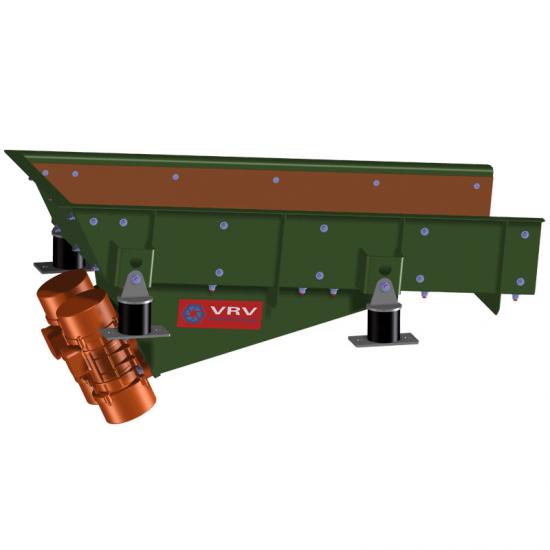
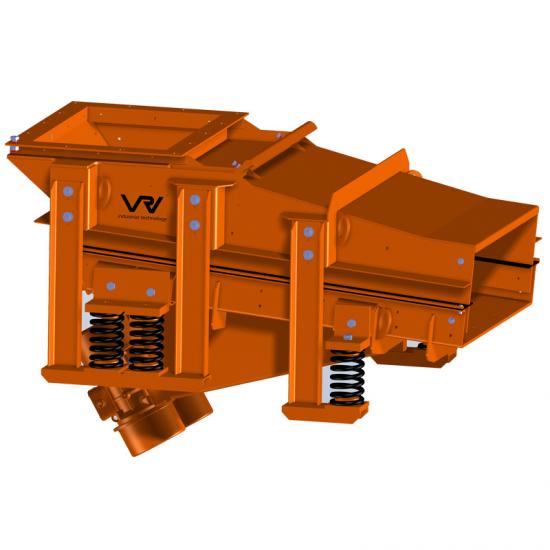
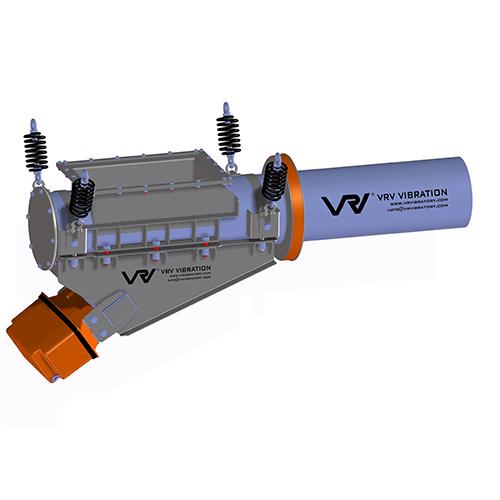
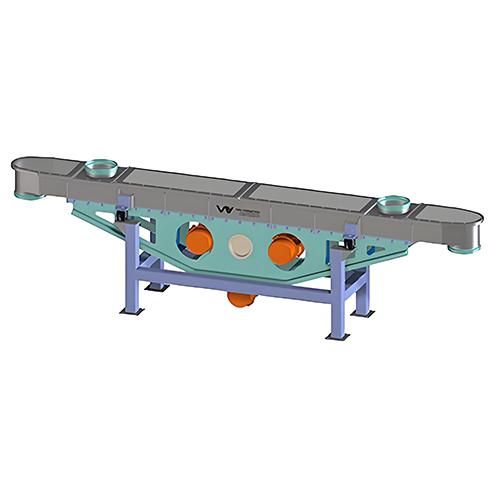

Standard or Custom Bulk material
What is better for your project?
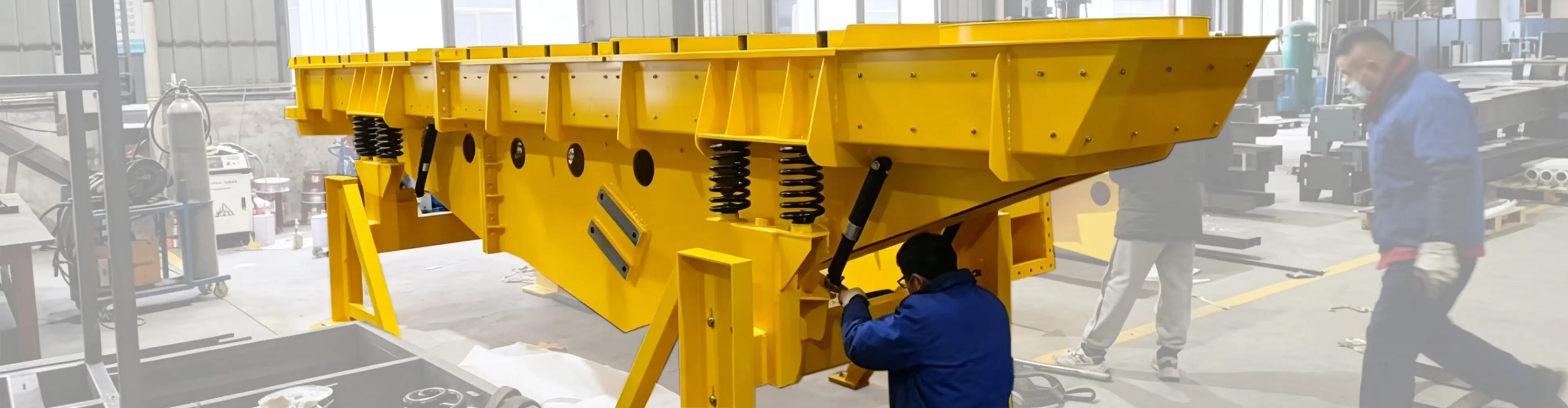
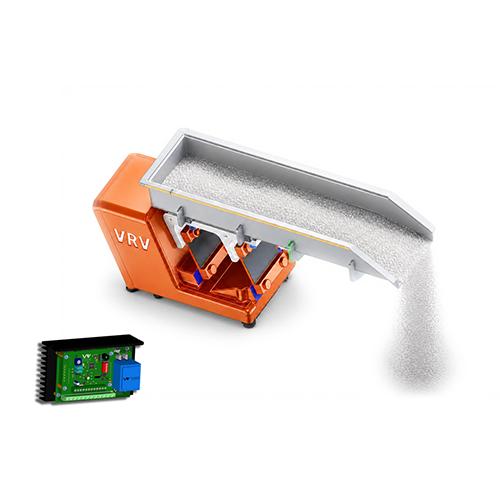
An electromagnetic trough vibrating feeder sits below the crusher hopper and controls how much material enters the crusher per unit of time. An electromagnetic coil drives the trough in a straight, repeating motion; material is tossed forward in small jumps rather than pushed by a belt. The feed rate changes by adjusting the coil current, so the flow to a jaw or gyratory crusher stays steady instead of surging in batches.
For hard rock and gravel, this matters because a crusher sized for a continuous load can choke or overwork when the hopper dumps too much at once, and run empty when the flow stops. The feeder turns uneven hopper discharge into a controlled line of material entering the chamber.
Crushers perform best when they receive a steady feed near rated capacity. A hopper alone releases material by gravity, and the rate changes with the head of material, moisture and particle shape. When flow surges, the chamber packs and the crusher draws higher current; when it drops, the machine runs light and production falls.
An electromagnetic trough vibrating feeder removes that variation. Once the amplitude and current are set, the trough discharges a repeatable volume per hour regardless of how full the hopper sits. This protects the crusher from choke feeding, keeps the product size consistent, and reduces shock on the drive and frame.
Hard rock and gravel are abrasive, so the trough lining sees wear rather than fatigue alone. Selection starts with three numbers: target tph, bulk density, and top feed size.
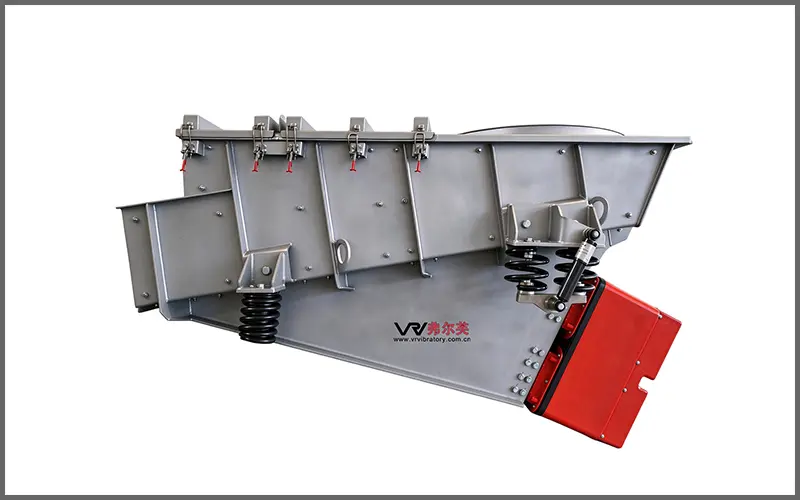
The feed rate on an electromagnetic feeder is adjusted through the control current, not by changing a mechanical pulley. Higher current raises amplitude and throughput; lower current slows the line down. A practical starting point runs the feeder at 60–70% of rated current and observes the crusher current before trimming upward.
A common mistake is setting amplitude high and running the trough mostly empty. The motion is designed to carry a load; an empty, over-amplified trough shakes itself and the support springs harder than the material does. Load the trough to a consistent bed, then tune current until the crusher holds a steady amperage near its rated band.
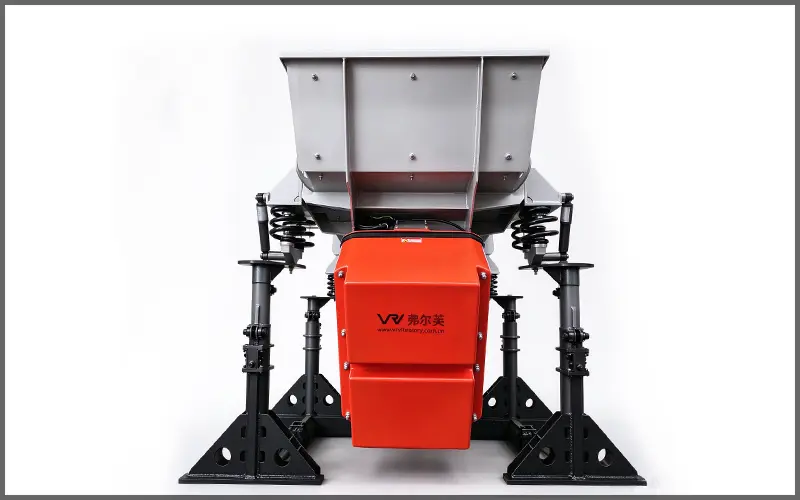
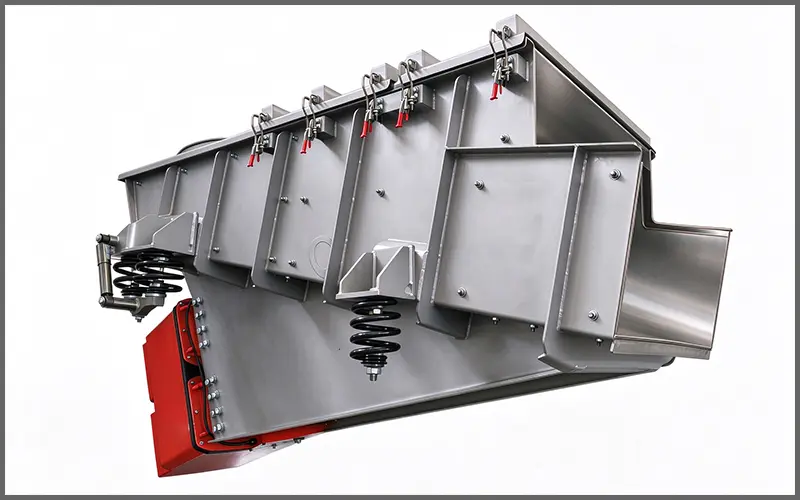
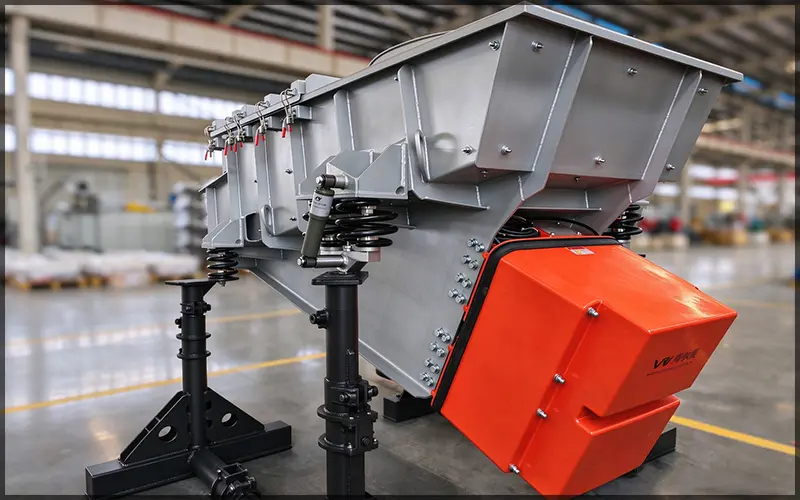
Open hopper discharge lifts dust when rock drops onto the pile. A covered trough with clamped bolt-on lid sections contains the fall and keeps dust inside the path; the quick-release latches on the cover let maintenance open one section at a time to inspect the liner without stripping the whole top.
Wear shows first on the inlet zone where rock lands. Replaceable liner plates let that zone be refurbished without rebuilding the trough, which keeps the unit in service over a long quarry or crushing season.
An electromagnetic drive suits fine to medium rock where feed must be metered closely and throughput stays moderate; amplitude changes electrically with no moving eccentric mass to align. A motorized (inertial) drive suits larger throughput and coarse, heavy loads, where a rotating eccentric mass carries more force.
For a crusher hopper that feeds hard rock and gravel at a steady, controlled rate rather than at maximum volume, the electromagnetic trough vibrating feeder covers the duty where fine control and low maintenance matter more than peak tonnage.
What tph range does an electromagnetic trough vibrating feeder cover for crusher hoppers? Typical units handle tens to roughly a few hundred tph depending on trough width, amplitude and material density. Coarse, heavy rock at high tonnage usually moves to an inertial or apron feeder; electromagnetic units suit steady metered feed rather than maximum throughput.
How do I adjust the feed rate to a crusher? Feed rate is set through the electromagnetic controller current. Raise current to increase amplitude and throughput, lower it to slow the line. Start near mid-range, observe crusher current, and trim until the chamber holds a steady load near rated amperage.
Why does the hopper still choke after a feeder is installed? Choking usually comes from trough width too small for top size, amplitude set too high on a light load, or the liner packed with sticky fines. Check particle clearance in the trough inlet and lower amplitude rather than pushing more material.
What liner is used for abrasive hard rock and gravel? Abrasion-resistant steel such as NM400 is standard; replaceable liner plates cover the high-wear inlet impact zone so the trough frame does not need rebuilding when lining wears down.
Can an electromagnetic feeder handle wet or sticky gravel? It can, but moisture and fines hang up on a rough liner. Smooth replaceable plates and a slightly steeper trough angle keep sticky material moving; very high moisture duty should be checked against bulk density before sizing.
VRV manufactures electromagnetic trough vibrating feeders in China for quarry, mining and aggregate customers. Trough width, liner grade, amplitude range and cover sealing are matched to the material and target tph before export, with OEM configurations and spare liner supply available. Send the material data, top size and required tph for a matched layout.
call us :
008617855911791 e-mail : sales@vrvibratory.com


 ipv6 network supported