



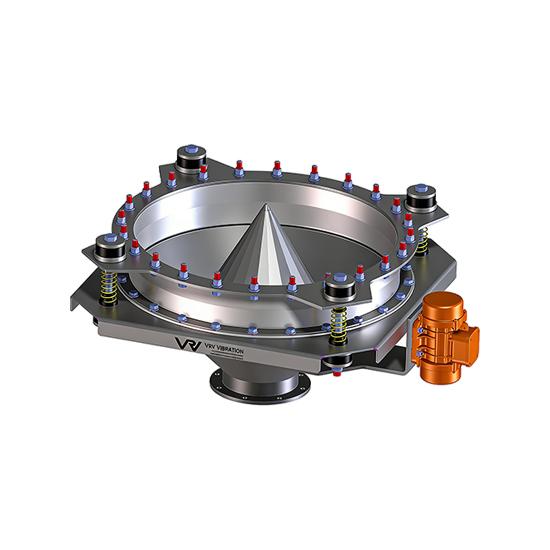
What Is a Vibrating Feeder
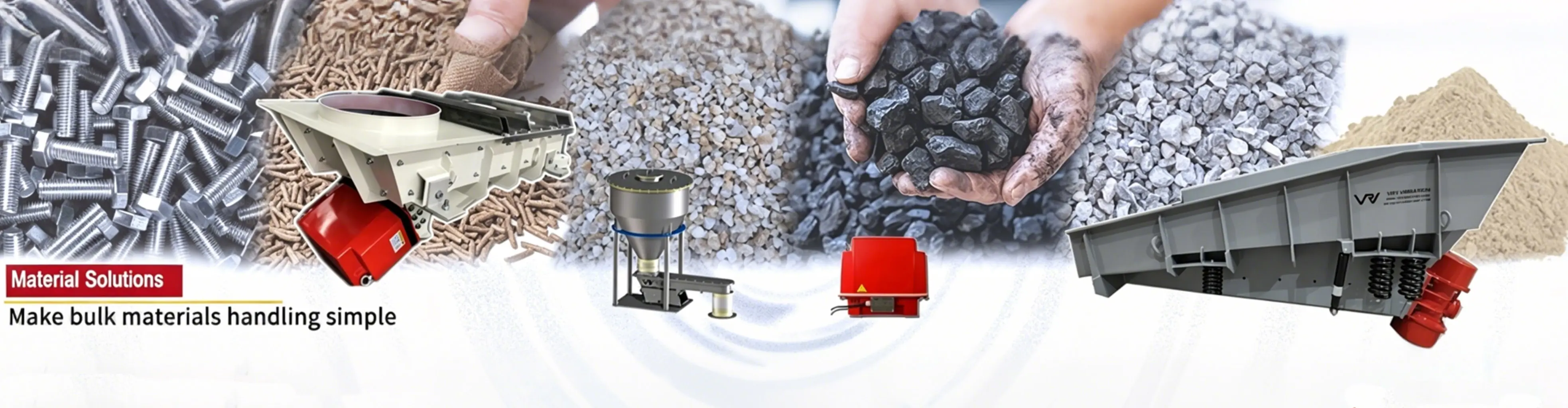
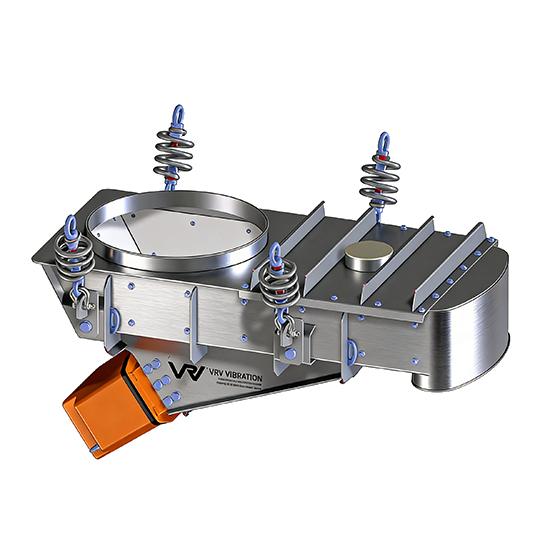
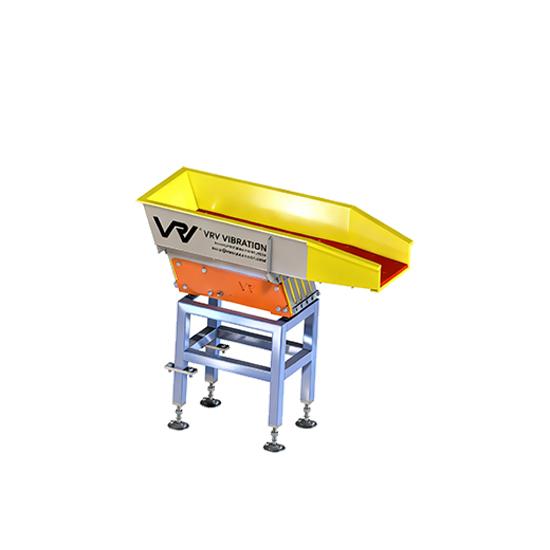
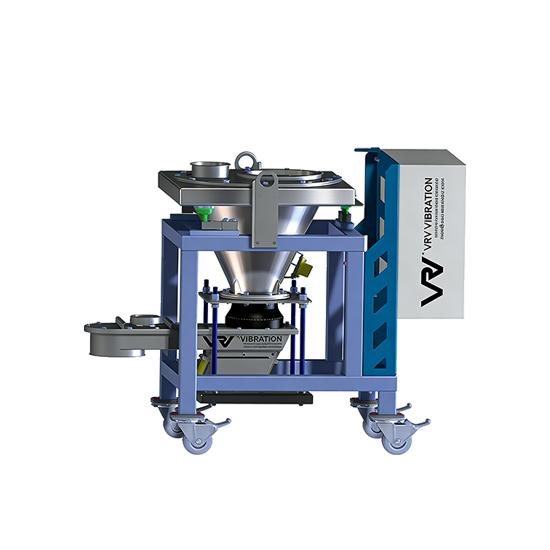
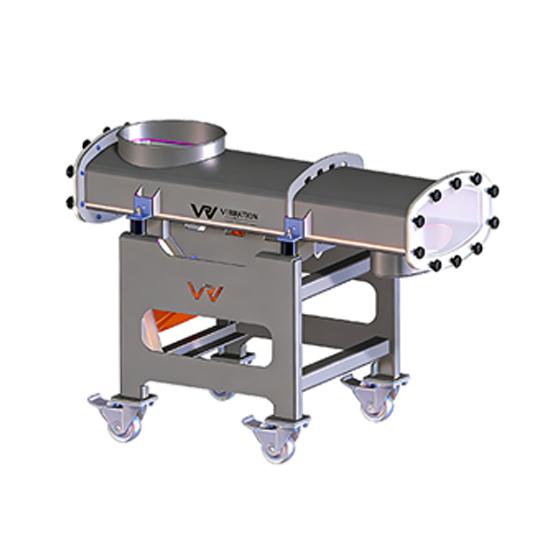
A vibrating feeder is a critical industrial material handling machine that realizes continuous and uniform material transfer through controlled directional vibration. As a vital connection between storage equipment and subsequent processing procedures in production lines, it adapts to the conveying demands of various industries while maintaining the integrity of transported materials. Its core design supports the excellent performance mentioned above, with more details about its operating principles and structural features to be elaborated below.
In industrial production, the efficient and stable conveying of materials is the key to increasing production capacity. VRV industrial Vibrating Feeder machine is the best solution for handling bulk materials. Watch the video below for a comprehensive product showcase and real on-site application of our industrial vibrating feeder, as it efficiently handles lumpy, granular and powdery materials in actual industrial lines.
How Does a Vibrating Feeder Work
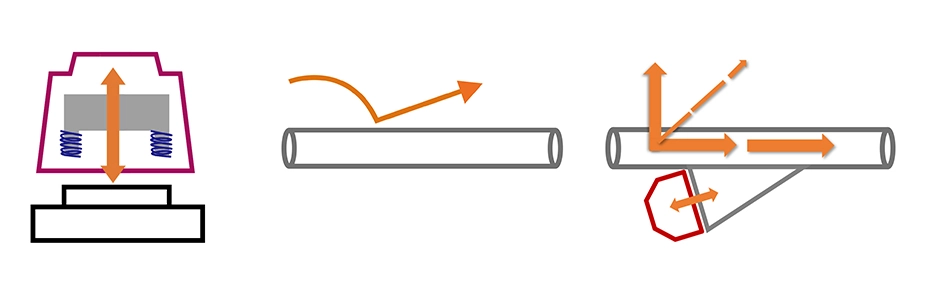
The vibrating feeder realizes materials conveying based on the vibration principle. Periodic exciting forces are generated by vibration sources such as electromagnetic exciters and motor eccentric blocks, causing the feeding trough/tube to vibrate at a specific frequency and amplitude. The materials in the trough/tube are affected by the vibration and move forward continuously in a jumping manner along the conveying direction. The feeding speed can be adjusted by regulating the vibration frequency, amplitude, or controlling the working time of the vibration source, so as to convey the materials evenly, continuously, and quantitatively to the specified position.
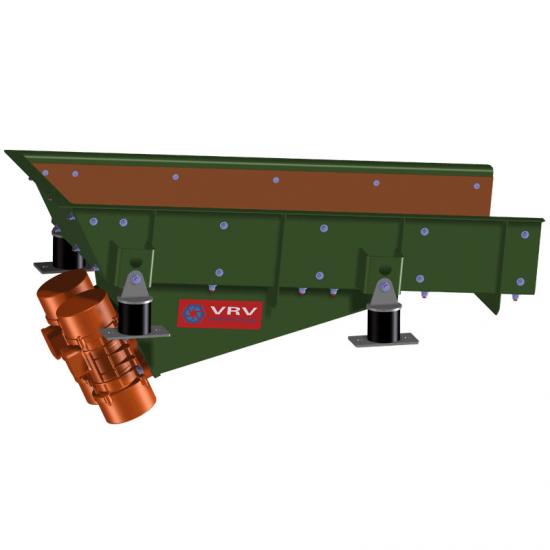
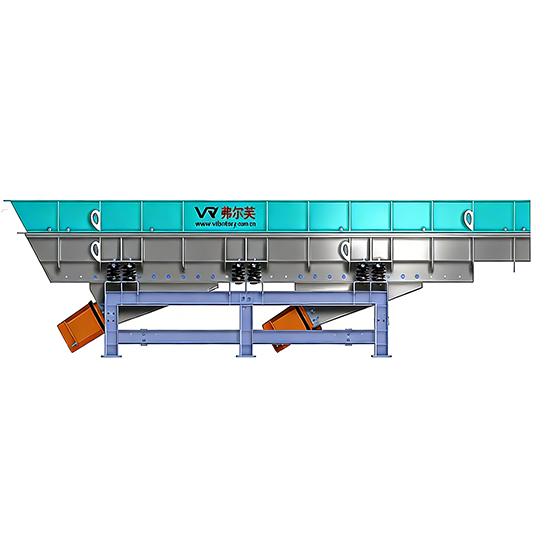
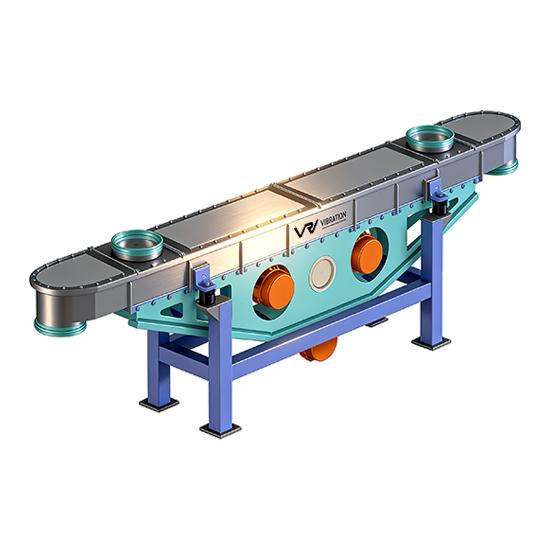
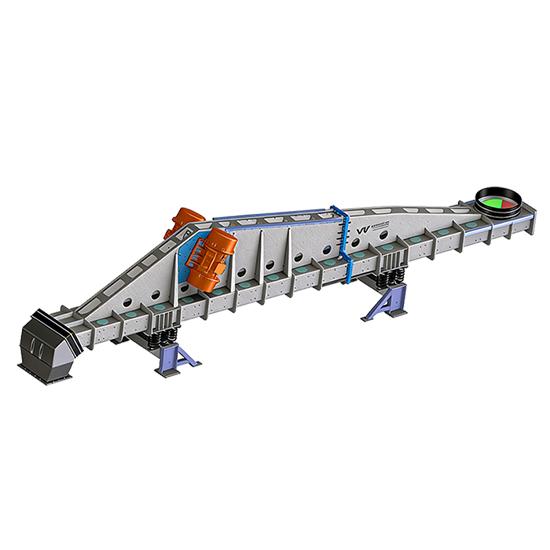
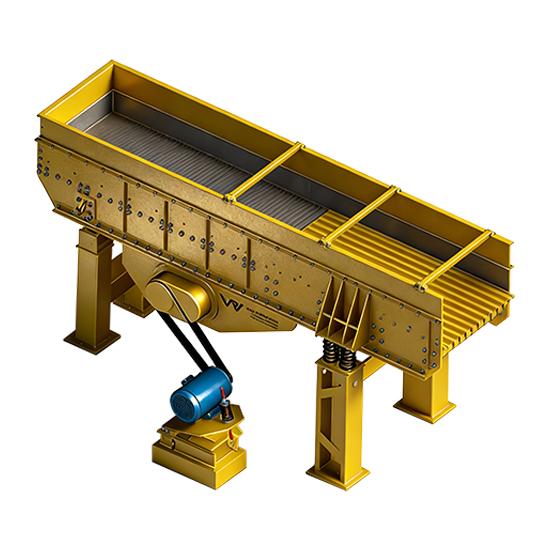
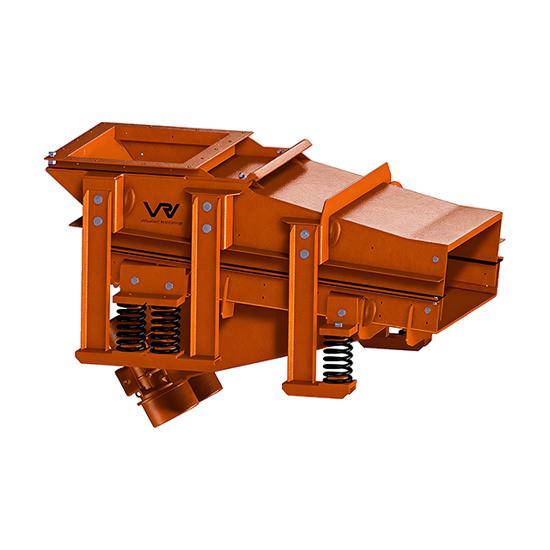
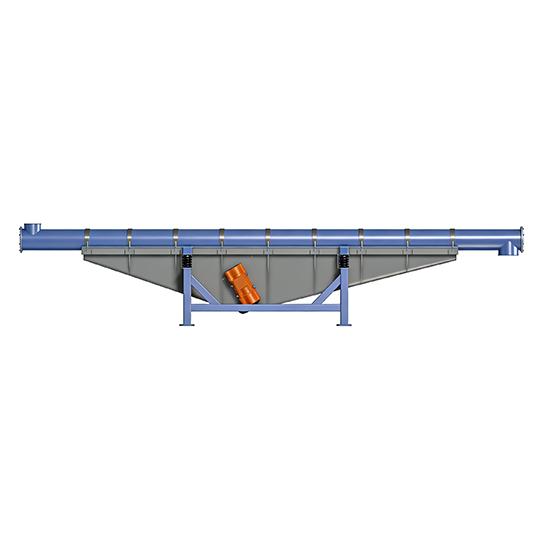
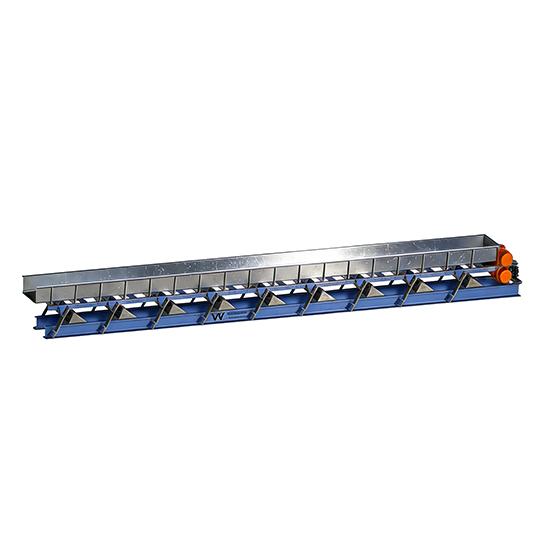
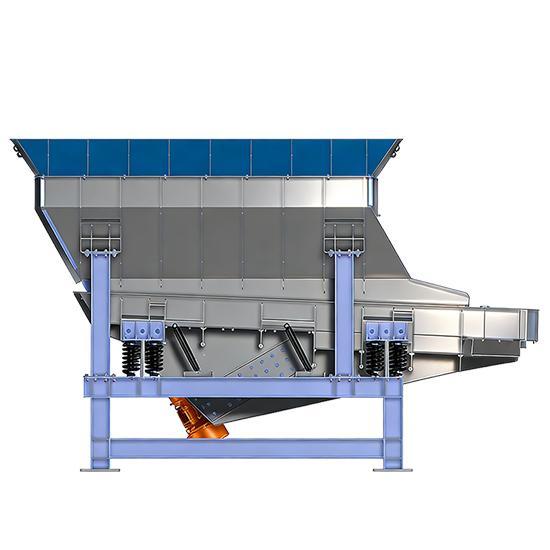
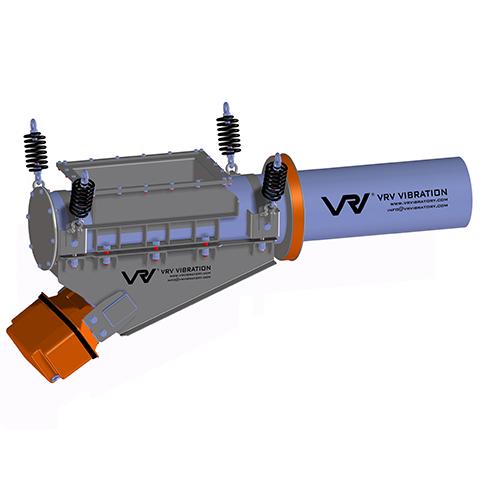
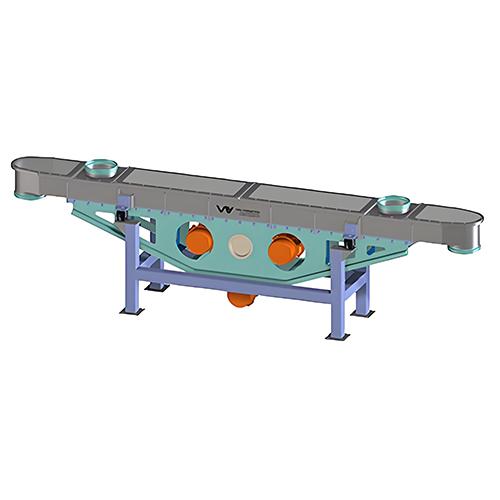
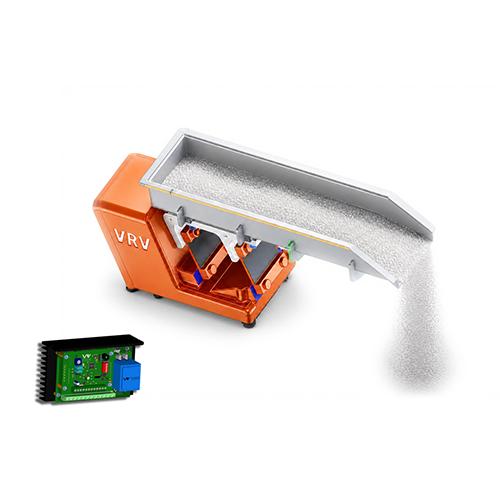
Modular Vibrating Feeder Structure | Clear layout of vibration motor, trough, shock absorber & base for easy maintenance
Vibrating Feeder Structure
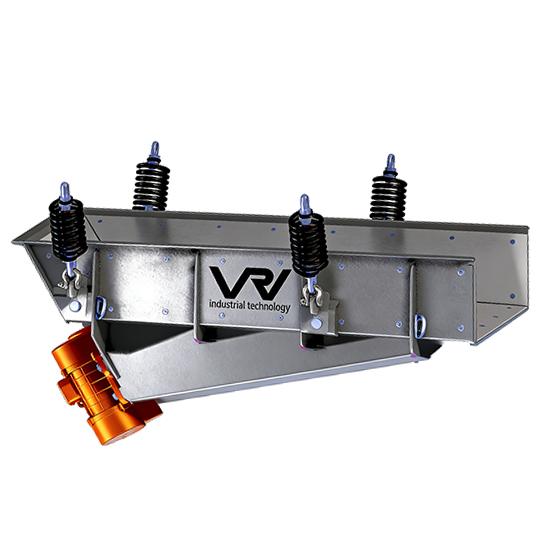
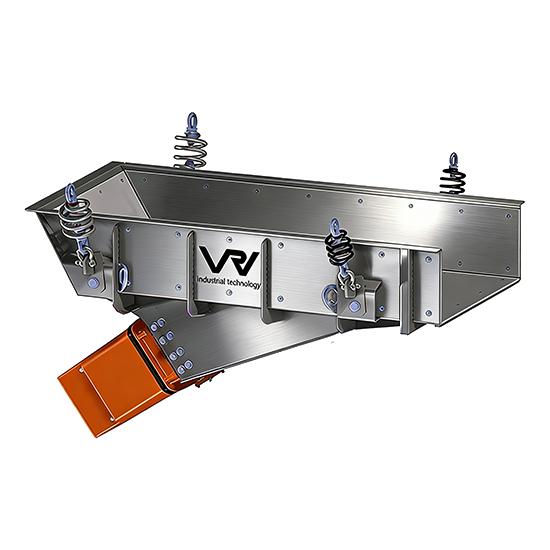
The biggest feature of vibrating feeder compared to other feeding equipment is its simple structure, which ensures low maintenance and long-term stable operation. Its main components are as follows:
‣ Vibrating feeder vibration source(Vibrating motor/Electromagnetic vibrator): As the vibration source of vibrating feeder, both options feature simple structure, high reliability, and easy maintenance, and are widely used in vibration equipment;
‣ Vibrating feeder controllers (For electromagnetic vibrator): A controller is essential if you choose an electromagnetic vibrator as the vibration source. Its core function is to adjust the vibrator's vibration force and amplitude, so as to achieve optimal feeding efficiency and accurate flow for different materials;
‣ Vibrating feeder trough/tube(Custom shapes & Anti-clogging design): The conveyor trough trough/tube has diverse shapes, adjustable volume, optional materials and anti-clogging performance. Common types include trough/tube, open/closed designs. Custom trough/tube shapes are available to ensure smooth conveying of various materials;
‣ Vibrating feeder supports/suspension(Spring shock absorption): The support or spring suspension system provides shock absorption, noise reduction and stable support, with easy installation. It effectively reduces vibration impact on the equipment foundation and extends the service life of vibrating feeder.
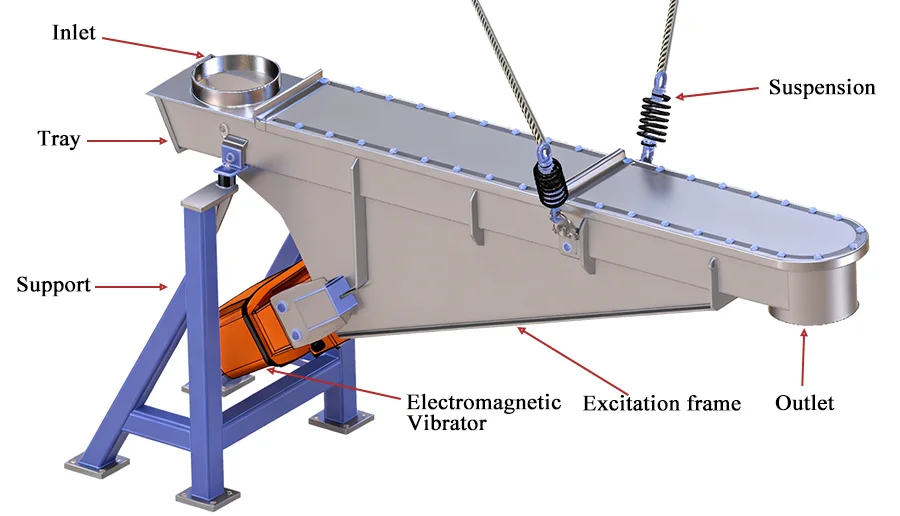
Vibrating Feeder Design/Structure
Vibrating Feeder Specifications
As a professional source manufacturer of customized vibrating feeders, we have no fixed models and provide tailor-made equipment per your exact needs (material, capacity, working conditions, dimensions, etc.). With advanced technology and premium raw materials, our stable vibrating feeders fit mining, metallurgy, chemical, building materials and other industries. We offer one-stop service including design, production, installation, maintenance and lifelong technical support.
|
PARAMETER |
STANDARD CONFIGURATION |
OPTIONAL UPGRADE |
Comparative Advantages |
|
CAPACITY |
100tph |
10 kg/h up to 1000t/h |
20% higher than the industry average. |
|
CONVEYING MODE |
Continuity |
Discontinuity |
More feeding mode for selection |
|
FEEDING ACCURACY |
±5% to ±10% |
±2% to ±5% |
15% higher than the industry average. |
|
CONYING DISTANCE |
500mm-2500mm |
150mm up to 15000mm |
20% longer or shorter than the industry average. |
|
VIBRATION FREQUENCY |
50Hz |
20-80Hz |
Customizable frequency |
|
POWER CONSUMPTION |
1.5kW |
0.75-7.5kW |
Energy saving design |
|
PROTACTION GRADE |
IP55 |
IP68(Explosion proof) |
Adapt to harsh environments |
Vibrating Feeder Advantages
——Why do industries choose VRV vibratory feeders?
‣ Simple & Durable structure (Low Maintenance). The core components are only electromagnetic/vibrating motor and conveying trough/tube. Its simple structure ensures robustness and durability, with almost no wear under 24/7 operation, greatlt cutting failure rates and maintenance costs.
‣ Uniform conveying & Materials protection. Vibration drives bulk materials to move gently in the trough,
forming a uniform flow. This avoids accumulation and blockage, and prevents
bulk material property damage caused by extrusion.
‣ High sealing performance (Dust-free operation). Our vibrating feeder (a specialized vibrating conveyor for
precise material feeding) offers tubular/square enclosed designs. O-ring seals
and steel joints at key parts ensure excellent sealing, eliminating dust
pollution for chemical, mining and food industries.
‣ Easy observation & Cleaning. VRV
equips the vibrating feeders with customized observation holes and detachable
covers, enabling real-time monitoring of material conveying and quick
post-operation cleaning.
‣ High Accuracy & Low noise. VRV
electromagnetic vibrating feeder supports 0-100% stepless speed
regulation, with instant start/stop for precise quantitative feeding. Its
operating noise stays below 80dB.
‣ Automated operation & Remote control. The vibrating feeder integrates with VRV controller and automated systems, supporting analog remote speed control to boost production efficiency and cut labor costs.
Vibrating Feeder Application Sites
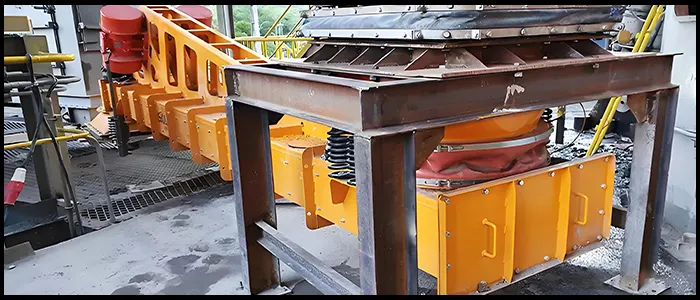
Heavy-Duty Wear-Resistant Vibrating Feeder for Cement | Adapt to high-abrasion materials like limestone, long service life
‣ Vibrating Feeder for Cement Industry (Continuous & Stable Raw Material Feeding)
Cement production lines have extremely high requirements for the continuity and stability of raw material feeding — any interruption in the feeding link will directly cause the entire clinker calcination, cement grinding and other processes to shut down, resulting in huge economic losses. The core raw materials for cement production include limestone (hard texture, strong abrasiveness), cement clinker (large particle size, high density), fly ash (powdery, easy to agglomerate) and gypsum, etc., with obvious differences in material characteristics. Our heavy-duty wear-resistant vibrating feeder can flexibly adapt to these diverse raw materials by optimizing the wear-resistant liner material and adjusting vibration frequency and amplitude. It effectively avoids material blockage, equipment wear and uneven feeding, ensuring continuous and stable feeding of raw materials to crushers, grinders and batching systems, and improving the overall operation efficiency of the cement production line by 35%.
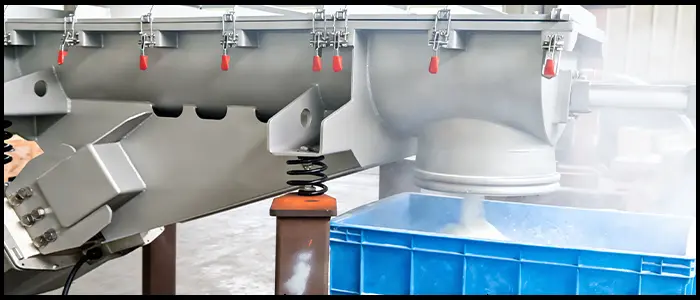
Hygienic Stainless Steel Vibrating Feeder | 304/316 material & CIP/SIP compliant for clean production
‣ Vibrating Feeder for Food Industry (Hygienic & Precise Material Conveyance)
The food industry has strict requirements for conveying equipment, focusing on food safety, hygiene compliance and zero cross-contamination. Common materials include flour (powdery, easy to agglomerate), sucrose (granular, easy to adhere) and milk powder (ultra-fine, moisture-sensitive). Our hygienic stainless steel vibrating feeder is made of food-grade 304/316 stainless steel (surface roughness Ra ≤ 0.8μm) with a detachable structure compatible with CIP/SIP cleaning requirements, avoiding residue and bacterial growth. Flexible vibration parameter adjustment enables gentle and precise conveying, meeting FDA, HACCP standards for flour milling, candy and dairy processing lines.
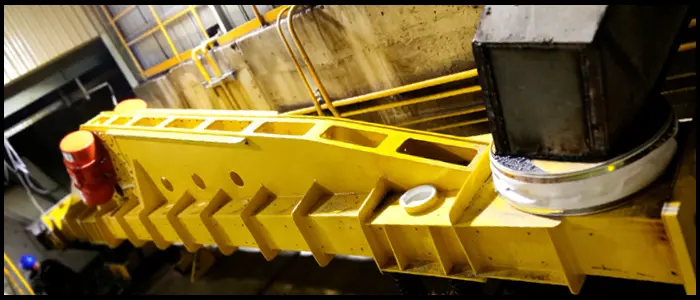
Metallurgical Feeding Solution | ±1.5% feeding accuracy, ensuring stable quality of ironmaking & steelmaking
‣ Vibrating Feeder for Metallurgical Industry (High-Precision Quantitative Feeding & High-Temperature Resistance)
Metallurgical production processes (including ironmaking, steelmaking, and non-ferrous metal smelting) have strict requirements for raw material feeding accuracy and stability — the proportion of raw materials directly affects the quality of molten iron, steel billets, and finished metal products. The core materials involved in metallurgical feeding include iron ore (abrasive, large particle size), coke (porous, high-temperature resistant), steel slag (corrosive, high hardness), and non-ferrous metal concentrates (such as copper concentrate and aluminum concentrate). Our heavy-duty high-temperature resistant vibrating feeder is equipped with high-wear ceramic liners and intelligent frequency conversion control systems. By flexibly adjusting vibration frequency & amplitude, it can achieve high-precision quantitative feeding with an error of ±1.5%, and stably operate in high-temperature environments up to 300℃. It effectively avoids material adhesion, equipment wear, and uneven feeding, ensuring the continuity of blast furnace ironmaking, converter steelmaking and other core processes, and reducing raw material waste by 25%.
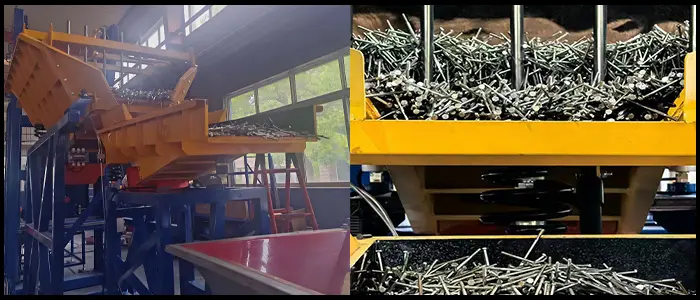
Industrial Vibrating Feeder System for Hardware Fastener Production
‣ Vibrating Feeder for Hardware Fasteners (Multi-Machine Coordination for High-Precision Conveyance)
For large-scale hardware fastener production lines, we deployed a synchronized conveying system composed of two or more industrial vibrating feeders. This integrated setup accurately and efficiently handles bulk fastener materials including bolts, nuts, and cap nuts. Boasting a robust, wear-resistant structure and optimized conveying efficiency, the system achieves a high throughput of 500t/h while maintaining precise speed control — perfectly matching the continuous, high-volume production demands of hardware manufacturing workshops.
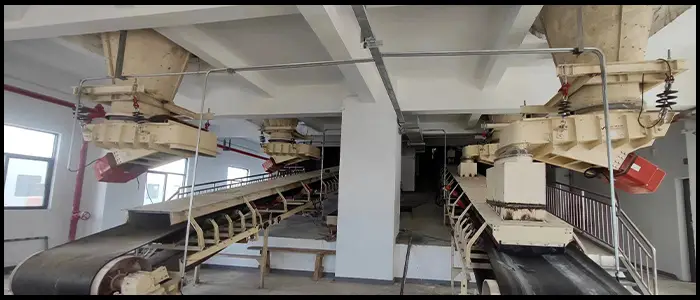
Continuous Feeding Solution for Glass Production | Zero downtime risk, stable supply for the entire production line
‣ Vibrating Feeder for Glass Industry (Continuous & Efficient Raw Material Conveyance)
Glass manufacturing plants impose stringent standards for raw material feeding — any halt in the conveying process will directly disrupt the entire production line’s progress. Glass production relies on a diverse range of raw materials, including quartz sand (coarse particle size, hard texture), soda ash (powdery, highly water-absorbent), limestone and feldspar, each with vastly distinct physical characteristics. Our industrial vibrating feeder easily adapts to these varied materials by flexibly adjusting vibration frequency, amplitude and inclination angle, effectively preventing material blockages, adhesion and poor discharge. This ensures an uninterrupted, stable raw material supply, supporting the glass industry’s demand for continuous, high-efficiency production.
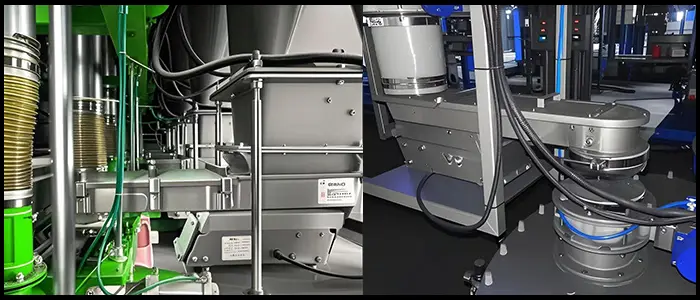
Lithium Battery Feeding Solution | High-purity conveying, ensuring stable battery performance and safety
‣ Vibrating Feeder for Lithium Battery Chemical Industry (High-Precision Granule & Powder Conveying)
Lithium battery production processes (including cathode material, anode material and electrolyte processing) have extremely strict requirements for feeding precision and material purity — any deviation in feeding amount or material contamination will directly affect battery capacity and safety performance. The core materials involved include lithium iron phosphate (powdery, easy to agglomerate), lithium carbonate (crystalline powder), graphite powder (ultra-fine, conductive) and other sensitive materials. Our high-precision electromagnetic vibrating feeder is equipped with anti-static and anti-adhesion liners and intelligent servo control systems. By flexibly adjusting vibration frequency & amplitude, it can achieve high-precision quantitative feeding with an error of ±2%, and effectively avoid material residue and cross-contamination. It stably operates in clean workshops, ensuring the continuity of lithium battery core production processes and reducing raw material waste by 20%.
Vibrating Feeder Price Reference
Vibrating feeder prices range widely from $100 to $85,000+ per unit — this practical vibrating feeder cost guide breaks down key pricing drivers including equipment type, capacity specifications, material selections and custom functional requirements: small electromagnetic vibrating feeders for laboratory or light industry use are priced between $100–$5,000, medium industrial-grade models for general manufacturing scenarios cost $5,000–$20,000, and heavy-duty wear-resistant vibrating feeders engineered for harsh working conditions such as mining and metallurgy are priced at $20,000–$85,000+; key cost drivers include 304/316 stainless steel or ceramic wear-resistant liners that add 15%–40% to the base price, custom configurations like PLC intelligent control, explosion-proof and anti-corrosion designs or CIP/SIP cleaning compatibility that increase costs by 20%–50%, and larger trough sizes or higher throughput capacities that push prices up proportionally, while bulk orders of 5 units or more typically qualify for 5%–15% discounts; these price ranges are based on 2025–2026 industry wholesale data, and specific quotes will depend on your exact application needs, so feel free to contact us for a tailored price plan matching your production requirements.
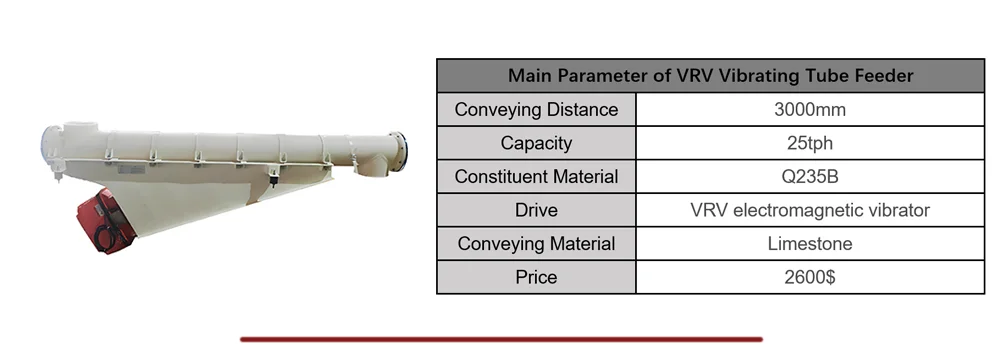
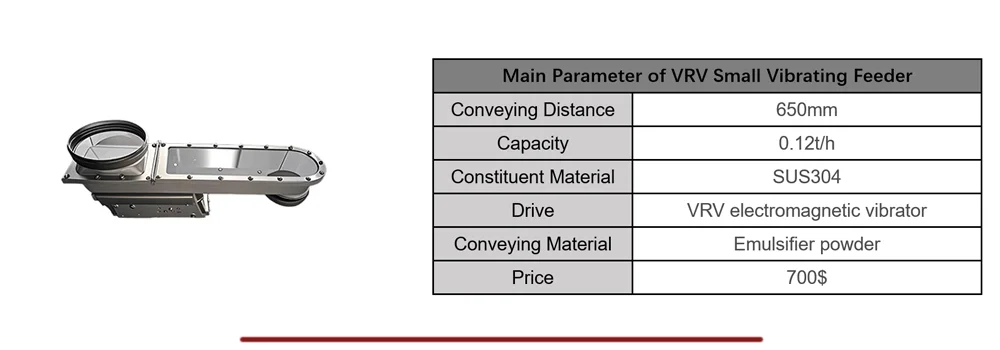
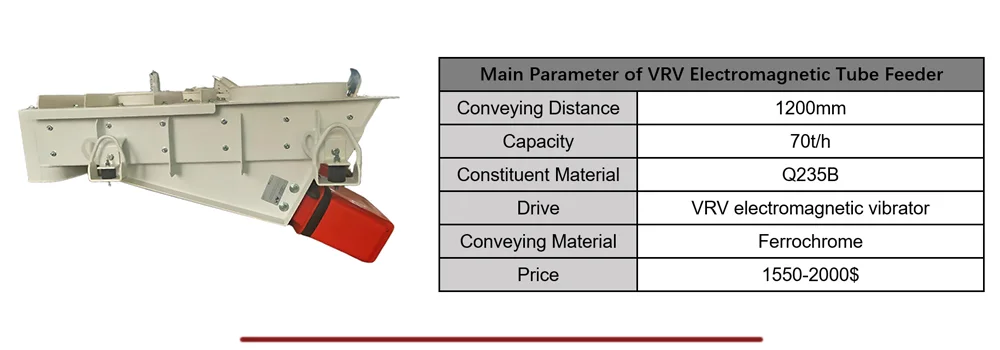
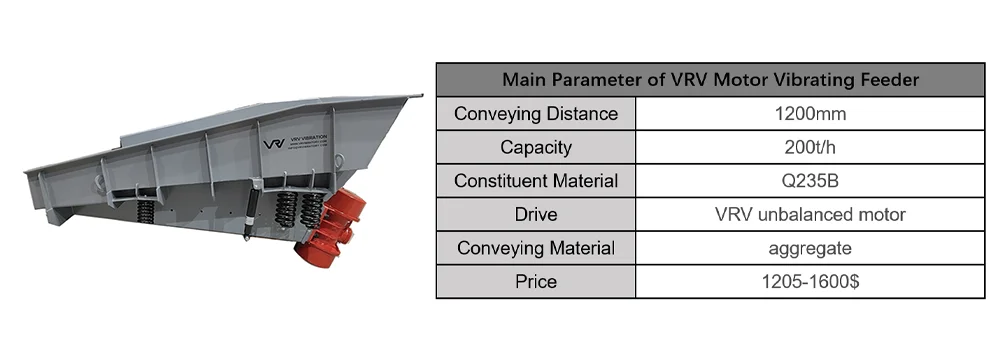
Vibrating Feeder Selection & Quotation
How to select your own vibrating feeder? VRV invite you to fill out vibrating feeder design SELECTION GUIDE, then send it to us. VRV engineer will design the best vibrating feeder model for you according to your requirement and provide you the complete quotation.

FAQ
Q1: What are the core selection criteria for a vibrating feeder?
A1: Core selection criteria include material
properties (particle size, humidity, corrosiveness), process parameters
(feeding capacity, accuracy, installation space), and working conditions (high
temperature, dust, explosion-proof requirements).
Q2: What are the common causes and
solutions for material blockage during the operation of a vibrating feeder?
A2: Common causes of blockage are
insufficient vibration amplitude, unreasonable trough inclination, high
material humidity, or excessive feeding amount, which can be solved by
adjusting amplitude, optimizing trough angle, adding anti-stick coatings, or reducing
upstream feeding speed respectively.
Q3: How to extend the service life of a
vibrating feeder?
A3: Extend its service life by regularly
inspecting and replacing vulnerable parts, lubricating rotating components on
schedule, and following standardized start-stop and operation procedures.
Q4: What are the core differences between a
motor vibrating feeder and an electromagnetic vibrating feeder?
A4: Motor vibrating feeders use motors and eccentric blocks for large-amplitude, low-frequency vibration (suitable for bulk materials) while electromagnetic ones use electromagnetic vibrator for high-frequency, small-amplitude vibration (suitable for precise feeding of fine materials), with different energy consumption and maintenance characteristics.
Q5. Can I buy just one vibrating feeder? What’s your delivery time? Price terms and payment terms?
A5: Yes, there is no quantity limitation; Normally it will take 1 to 3 months; EUR and USD; EXM/FOB/CIF.
Q6: How to guarantee the quality?
A6: VRV marks every equipment with unique serial number, by which design parameters can be easily traced and after-service can be ensured in years. VRV takes responsible for every equipment perpetually. Any issues occurred during the life cycle of VRV vibratory equipment will be analyzed by our engineers thus to find out the optimal solution. Our company is also willing to assist customer’s field experts and maintenance engineers and provide our test data and advices to help them solve problems.
More question, feel free to contact us!
Your Reliable Vibrating Feeder Manufacturer & Supplier
VRV is a professional China vibrating feeder manufacturer integrating independent R&D, customized production and one-stop after-sales service. We specialize in high-quality, durable industrial vibrating feeders that are widely applied in mining, building materials, food processing, hardware manufacturing and other bulk material handling industries. Our vibrating feeders come with flexible customizable solutions to match different production line requirements, paired with competitive factory-direct pricing and timely global technical support. Whether you need standard models or tailor-made equipment, we can fully meet your bulk material conveying and feeding needs efficiently.
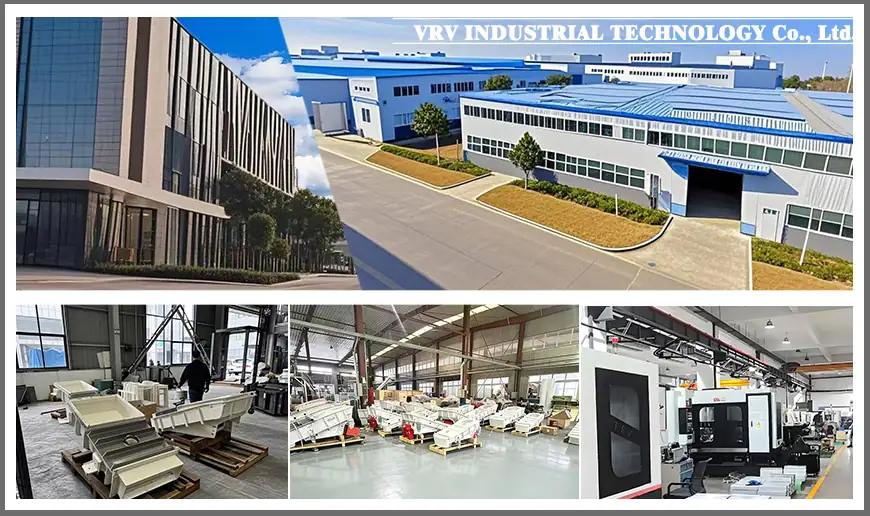
Industrial Vibrating Feeder Manufacturer Factory Exterior View
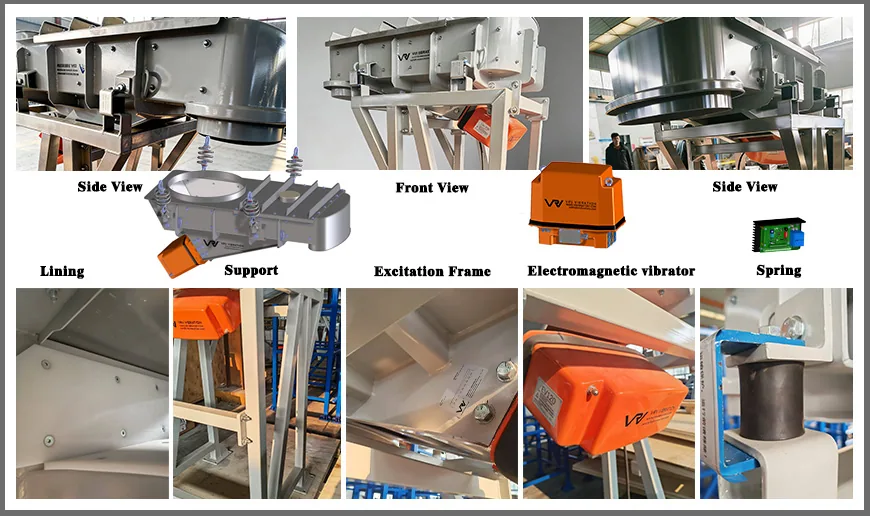
Professional Vibrating Feeder Product Details Shot
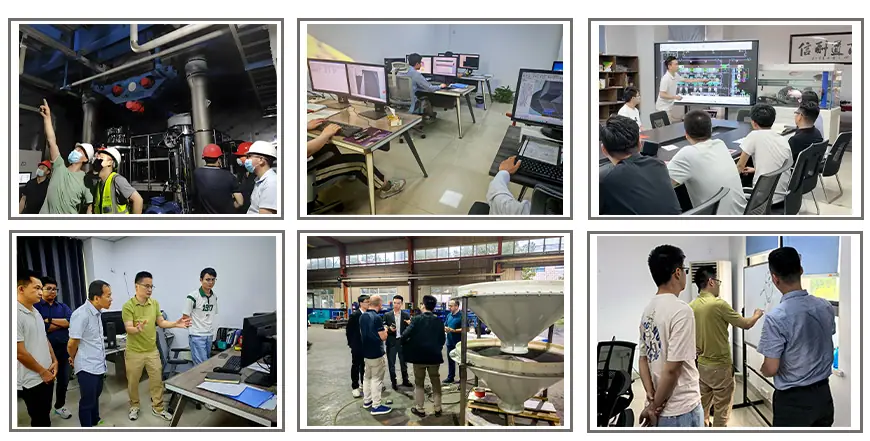
Vibrating Feeder Manufacturer R&D & Client Communication Scene
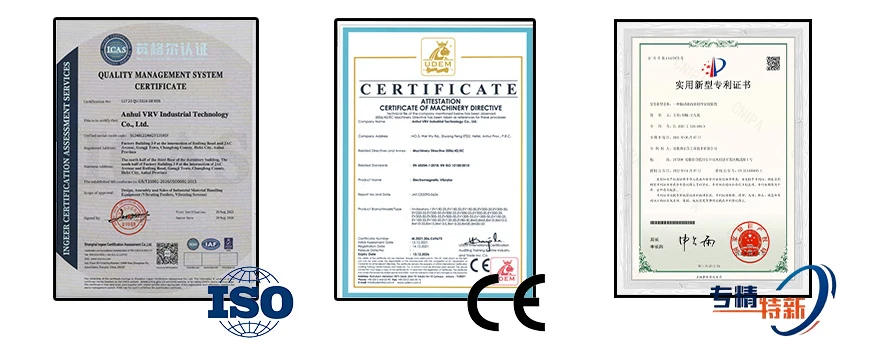
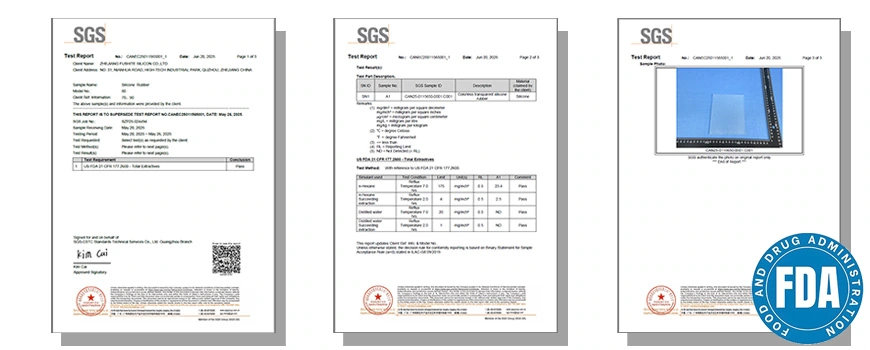
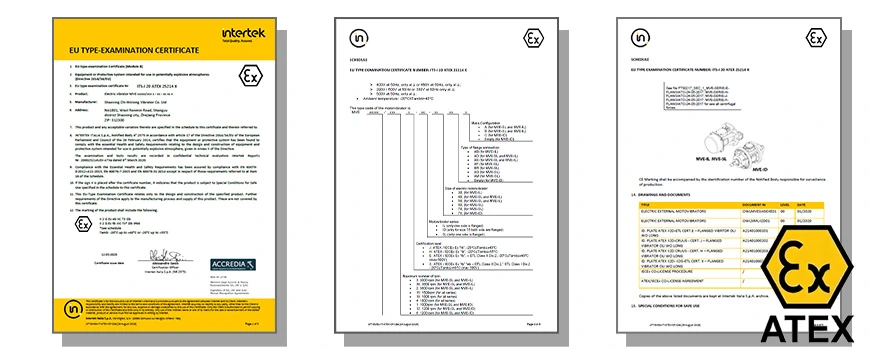
Qualification Certificates of Chinese Vibrating Feeder Manufacturers
1, ISO management system certification
guarantees consistent performance of vibratory feeder, supporting reliable
material conveying solutions for multi-industry clients.
2, CE approved electromagnetic vibrator for
vibratory feeder, meets strict EU safety requirements, ideal for industrial
applications in European regions.
3, SSU&I, as a specialized, sophisticated,
unique & innovative enterprise, we focus on R&D of high-precision
vibrating feeder, providing customized solutions for niche industry pain
points.
4, FDA approved vibratory feeder, compliant
with food and drug industry hygiene requirements, perfect for
contamination-free material handling.
5, ATEX compliant vibratory feeder, designed
for explosive environments, ensuring safe and stable material conveying in
high-risk industrial scenarios.



 ipv6 network supported